
“A Forgotten Landscape: Tongbok-ri and the Making of Modern Pyeongtaek
전통과 근대, 일본과 조선, 신앙과 글자가 만난 자리
나는 평택에서 보기 드문 5대 크리스천 가문에서 태어났다. 하지만 내 출생지는 평택이 아니다. 나는 뚝섬에서 태어났고, 우리 집안의 이야기는 평택에서 시작되어 뚝섬을 거쳐 다시 평택으로 돌아왔다.
이 글은 한 집안의 기록이면서 평택이라는 도시가 겪은 근대화, 식민지, 전쟁, 산업화의 흐름과 함께 이어진 이야기다.
안성 최부자 집안에서 평택 통복리 82번지로
우리 할머니는 1900년생이다. 호적에는 1903년으로 기록되어 있지만, 실제 출생은 1900년이었다. 안성에서 산을 여러 개 가진 최부자 집안의 셋째딸로 태어난 할머니는 열여섯 살에 평택 통복리 82번지로 시집을 왔다.
그 집은 당시 평택에서 손꼽히는 부농의 집이었다. 시할머니는 어린 신부에게 첫날 이렇게 말했다.
“뒷마당엔 절대 가지 마라.”
그 말은 이유를 묻는 것조차 허락되지 않는 시대의 권위였다. 할머니는 그 말을 그대로 지켰다.
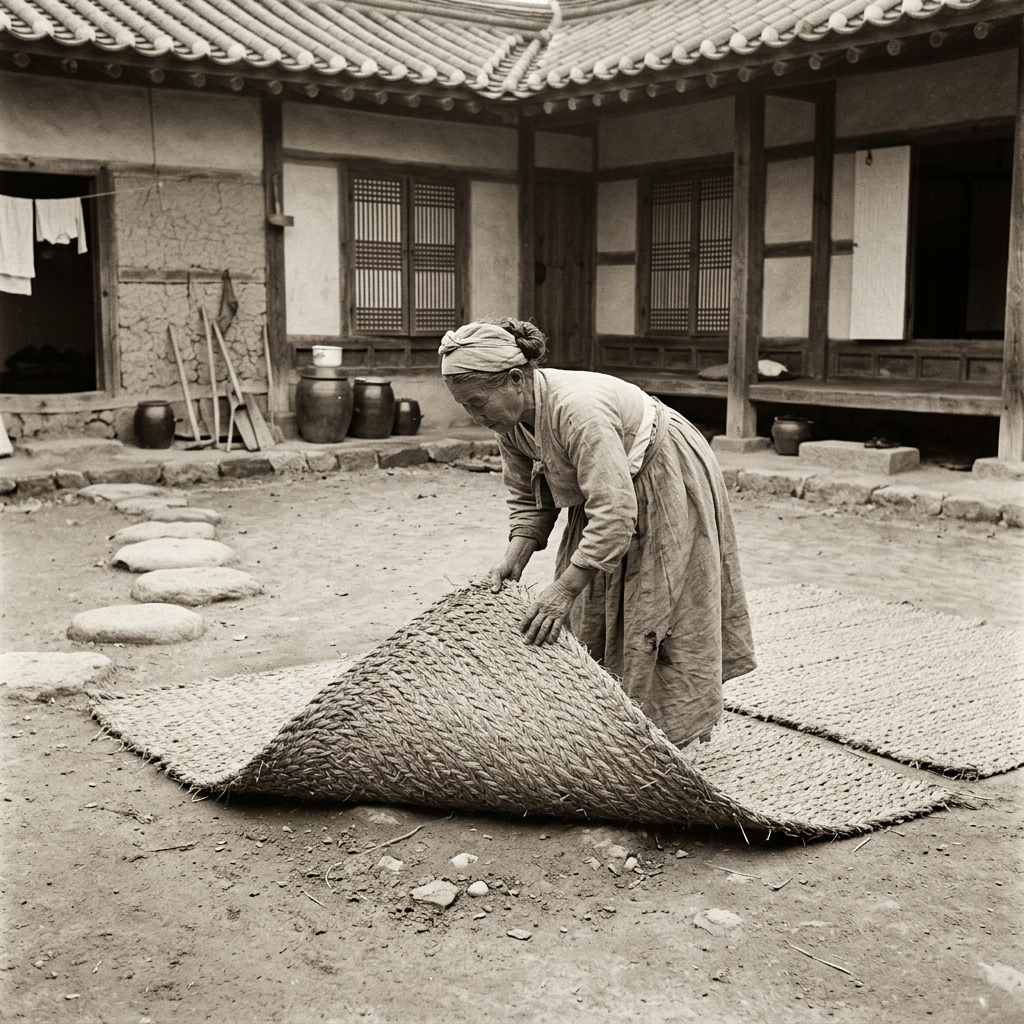
서양 선교사의 방문과 금단의 뒷마당
1917~1918년 어느 날, 장로교 계열로 보이는 서양 선교사가 집을 방문했다. 그는 시할머니에게 “영생”에 대해 설명했다.
당시 많은 조선인들이 그랬듯, 시할머니는 영생을 현세에서 죽지 않고 사는 것으로 이해했다. 그 오해는 곧 개종의 순간이 되었다.
그날 시할머니는 하인들에게 뒷마당의 거적을 걷으라고 했다. 그 아래에는 커다란 구렁이가 있었다. 당시 농촌 지역에서 흔히 있던 토속적 뱀 신앙의 흔적이었다.
구렁이는 제거되었고, 그 자리 위에 작은 정자가 세워졌다. 그곳에서 성경공부가 시작되었다. 평택 성결교회의 시발점이 우리 할머니 집 뒷마당이었다.
그날 밤, 시할머니는 꿈을 꾸었다. 이무기처럼 생긴 큰 뱀이 눈물을 흘리며 “나는 간다.” 라고 말한 뒤 허공으로 사라졌다고 한다.
오래된 미신이 떠나가고 새로운 신앙이 들어오는 상징이었다.
일본인들이 살던 평택역 주변
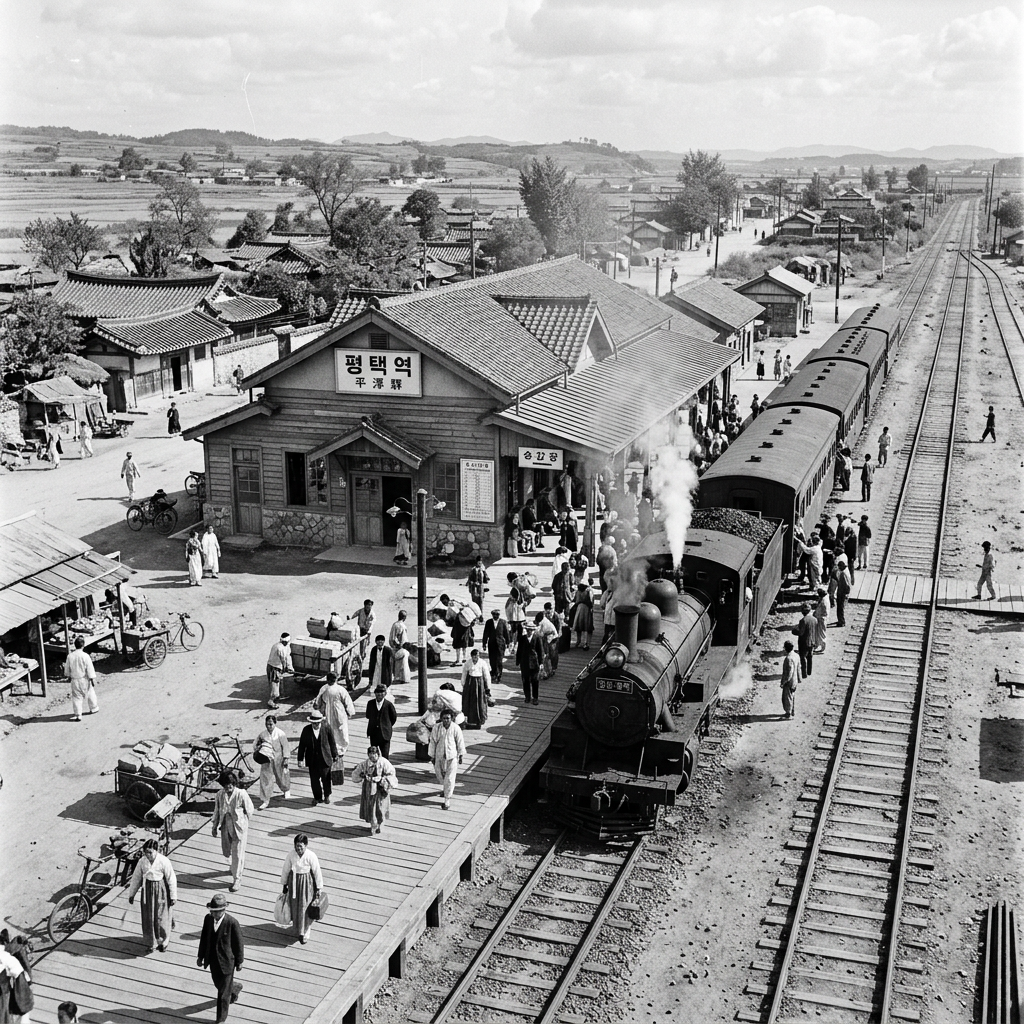
통복리 82번지는 평택역 바로 옆이었다. 평택역은 1905년에 개통되었고, 그 주변은 일본인 거주지로 빠르게 변했다.
할머니는 그곳에서 일본인 아줌마에게 단무지 만드는 법을 배우고, 생선을 소금에 절여 오래 보관하는 법을 배웠다. 그 시대 조선 여성들은 한글은 못 읽어도 일본말은 생활 대화가 가능할 정도로 배워야만 했다.
평택역 주변은 조선과 일본, 전통과 근대가 뒤섞인 공간이었다. 할머니는 그 한복판에서 살았다.
향교와 일본식 근대 교육을 동시에 받은 할아버지
내 할아버지는 향교에서 사서삼경을 배우고, 일본인 교사에게서 서양식 근대 교육을 받았다.
그리고 그 시대 평택에서는 거의 불가능한 바이올린을 연주하는 사람이었다.
할아버지가 바이올린을 연주하던 단 한 장의 사진. 그 사진은 집안의 지적 세계와 사회적 위치를 보여주는 거의 유일한 기록이었다.
할머니가 살아계실 때 그 사진을 갖고 싶었지만 말을 못 했던 그 마음. 그리고 1999년 할머니가 돌아가시고 그 사진이 사라져버린 그 순간.
그건 단순한 사진 유실이 아니라 우리집안의 근대적 흔적이 사라진 순간이었다.
가세의 기울기와 전쟁의 불길
구렁이를 없앤 뒤 집안의 가세는 서서히 기울기 시작했다. 하지만 진짜 몰락은 한국전쟁이 터지면서 찾아왔다.
평택읍사무소가 전소되면서 할머니 집안의 모든 토지 문서가 소실되었다. 소작농들은 “우리 땅이다”라고 주장했고, 국가도 증명할 방법이 없었다.
그렇게 통복리 82번지의 넓은 땅은 하루아침에 남의 손으로 넘어갔다.
그 집터는 아무도 소유권을 주장하지 못한 채 수십 년 동안 평택역 한 귀퉁이의 빈터로 남아 있다.
할머니의 옛날 이야기중 지금 평택 중앙시장이 들어선 자리가 할머니 가족의 배과수원이었다고한다. 전쟁으로 평택 읍사무소가 전소되고, 소작농들의 증언으로 소유권을 회복 할 수도 있었지만 우리땅을 스스로 내어놓은 소작농은 하나도 없었다. 다 자기들의 재산으로 등록되어 할머니는 땅 한뼘 회복할수없었다. 한국전쟁은 우리 가족을 이렇게 이중 삼중으로 어렵고 억울했지만 정부도 토지개혁때 소실된 재산들 일부를 주인에게 돌려주었지만 그 행운이 우리 가족에겐 오지 않았다
뚝섬으로의 이동과 다시 시작된 삶
전쟁과 몰락 속에서 우리 가족은 타지로 떠 돌다 뚝섬-지금의 성수동 으로 이동했다.
뚝섬은 철공소, 시장, 공장, 노동자들이 뒤섞인 곳이었다. 그곳에서 당신 가족은 다시 삶을 시작했다.
재산은 잃었지만 신앙은 잃지 않았다.
교회에서 한글을 깨우친 할머니
일자무식이던 할머니는 교회를 다니며 성경책을 읽기 위해 한글을 하나하나 깨우쳤다.
그리고 돌아가시기 몇 달 전까지 소파에 앉아 돋보기 없이 신문을 읽으셨다.
달력에는 우리 가족의 생일이 모두 적혀 있었다. 누구도 생일을 지나칠 수 없었다. 할머니는 가족의 기억을 지키는 사람이었다.
다시 평택으로 — 아버지의 개척교회
뚝섬에서 가족을 꾸리고 대학을 졸업한 아버지는 결국 평택으로 다시 돌아왔다.
그 땅은 잃었지만 그 지역은 “우리 집안의 뿌리”였기 때문이다.
아버지는 나사렛성결교회 소속이었고, 평택 주변의 작은 촌에서 직접 시골교회를 개척하셨다.
시간이 지나면서 평택에는 성결교회보다 나사렛교회가 더 많아졌다.
아버지는 그 흐름의 한복판에 있었다.
그리고 나는 — 5대째 신앙을 이어받다
나는 뚝섬에서 태어나 평택으로 다시 돌아온 아버지의 신앙을 이어받아 5대째 크리스천이 되었다.
평택은 전쟁, 미군기지, 공단, 이주민의 도시가 되어 가문이 한 지역에서 5대 신앙을 이어가는 것이 거의 불가능한 곳이다.
하지만 우리 집안은 일제강점기 → 해방 → 한국전쟁 → 산업화 → 현대 평택 이 모든 시대를 지나 신앙만큼은 끊어지지 않았다.
그 시작은 평택역 한 귀퉁이, 지금도 주인 없는 빈터로 남아 있는 통복리 82번지 뒷마당에서 거적 아래 숨겨져 있던 구렁이를 치워버린 그날이었다.
Where tradition and modernity, Japan and Korea, faith and literacy met in one family
I come from a rare lineage in Pyeongtaek— a family that has carried Christian faith for five generations. But I wasn’t born in Pyeongtaek. I was born in Ttukseom, and our family’s story began in Pyeongtaek, moved to Ttukseom, and eventually returned to the place where everything started.
This is not only a family history. It is also the story of Pyeongtaek itself— a town shaped by modernization, colonial rule, war, and industrial change.
From the Choi Family of Anseong to Tongbok-ri 82
My grandmother was born in 1900, though her official record says 1903. She was the third daughter of the wealthy Choi family of Anseong, a household known for owning several mountains.
At sixteen, she married into a prosperous farming family at Tongbok-ri 82, right beside Pyeongtaek Station.
On her first day, her mother‑in‑law told her:
“Never go into the backyard.”
It was a command from a time when questioning elders was unthinkable. My grandmother obeyed without asking why.
A Western Missionary and the Forbidden Backyard
Around 1917–1918, a Western missionary—likely Presbyterian—visited the house and spoke to my great‑grandmother about “eternal life.”
Like many Koreans of that era, she misunderstood it as never dying in this world, and that misunderstanding became her moment of conversion.
She ordered the servants to lift the straw mat in the backyard. Under it lay a large snake— a remnant of traditional Korean snake worship.
The snake was removed, a small pavilion was built on that spot, and Bible study began there.
That night, she dreamed of a large serpent—an imugi— crying and saying, “I am leaving,” before disappearing into the air.
It was the symbolic moment when old beliefs left and a new faith entered.
A Neighborhood Filled with Japanese Families
Tongbok-ri 82 stood right beside Pyeongtaek Station. The station opened in 1905, and the surrounding area quickly became a Japanese residential zone.
My grandmother learned how to make pickled radish, how to salt fish for long preservation, and other household techniques from Japanese women living nearby.
Women of her generation often couldn’t read Korean, but they could speak enough Japanese to get through daily life— because that was the language they were required to use.
Pyeongtaek Station’s neighborhood was a place where Korea and Japan, tradition and modernity, were constantly intertwined.
My grandmother lived in the middle of that world.
My Grandfather: A Man Who Walked Between Two Worlds
My grandfather studied Confucian classics at the local Hyanggyo, and at the same time received Western-style modern education from Japanese teachers.
And he did something almost unheard of in rural Pyeongtaek at the time— he played the violin.
When I was young, there was one photograph of him playing the violin. I wanted that photo so badly, but my grandmother was still alive then, and I didn’t dare ask.
When she passed away in 1999, the photo simply disappeared.
It wasn’t just a lost picture. It was the disappearance of one of the few remaining traces of my family’s early modern history.
Decline and the Fire of War
After the snake was removed, the family’s fortune began to decline slowly. But the true collapse came during the Korean War.
The Pyeongtaek township office burned down, and with it, all land records—including ours. Tenant farmers claimed the land as theirs, and the state had no documents to prove otherwise.
The large property at Tongbok-ri 82 was lost overnight.
The site remained an empty lot beside Pyeongtaek Station for decades, with no one able to claim ownership.
One my grandmother’s old stories, she mentioned that the site where Pyeongtaek Central Market now stands was once her family’s pear orchard. The Pyeongtaek town office was completely burned down during the war, and although we could have recovered ownership based on the testimonies of tenant farmers, not a single soul of them voluntarily gave up their land. Since the land was all registered as their property, my grandmother could not recover even a single inch of it. The Korean War brought double and triple hardship and injustice to our family, and while the government did return some of the property lost during land reform to its owners, that good fortune did not come to our family.
It wasn’t just a loss of property. It was the erasure of a landscape— a place where my grandmother once walked among pear trees, a place that later became the busiest market in Pyeongtaek.
People shop there now without knowing that beneath the concrete and stalls and neon signs was once a quiet orchard belonging to a young woman who came from Anseong at sixteen and lived her entire life believing that land was still hers.
The market stands today, but the orchard is gone. Only her memory remained, and now that memory lives through us.
Moving to Ttukseom and Starting Over
Amid war and loss, my family moved to Ttukseom.
It was a place of factories, workshops, markets, and working-class life. There, my family began again.
We lost our property, but not our faith.
My Grandmother Learned to Read Through the Church
My grandmother had never learned to read. But she began attending church, and in order to read the Bible, she slowly taught herself Korean— letter by letter, word by word.
Until a few months before she passed away, she would sit on the sofa and read the newspaper without a magnifying glass.
On her calendar, she wrote down every family member’s birthday. No one in our family ever missed a birthday because she kept track of all of us.
She was the keeper of our family’s memory.
Returning to Pyeongtaek — My Father’s Church
My father grew up in various places and mat my mother and got married settled in Ttukseom but eventually returned to Pyeongtaek.
The land was gone, but the place was still our family’s root.
He belonged to the Church of Nazarene , and he planted a small rural church in a village near Pyeongtaek.
Over time, Nazarene churches grew rapidly in the region, eventually outnumbering Holiness churches.
My father stood in the middle of that shift.
And Then There Is Me — The Fifth Generation
I was born in Ttukseom, but inherited the faith that began at Tongbok-ri 82 and returned to Pyeongtaek through my father.
Pyeongtaek is a city shaped by war, migration, industrialization, and constant change. It is almost impossible for a single family to maintain five generations of faith in one region.
But my family did.
From the Japanese colonial period to liberation, to the Korean War, to industrialization, to modern Pyeongtaek— our faith endured.
And it all began in a backyard at Tongbok-ri 82, where a straw mat was lifted, a snake was removed, and a new story began.
“I Grew Up Between Two Grandmothers”
When I was very young, my maternal grandmother raised me in Cheongdam-dong. After my father returned to Pyeongtaek, I lived with my paternal grandmother— ate beside her, slept beside her, and followed her everywhere.
Because of that, I carry memories from both of my grandmothers. Two different women, two different worlds, two different histories.
My siblings didn’t hear the stories I heard. I was the one who stayed closest to her, the one she whispered her memories to, the one who inherited the stories of Tongbok-ri 82 and everything that happened there.
The orchard, the station, the Japanese neighbors, the missionary, the snake, the war, the lost land— all of it came to me because I grew up beside her.
