
The alleys of Samcheong-dong were my mother’s childhood. 삼청동 골목은 엄마의 유년시절이었다
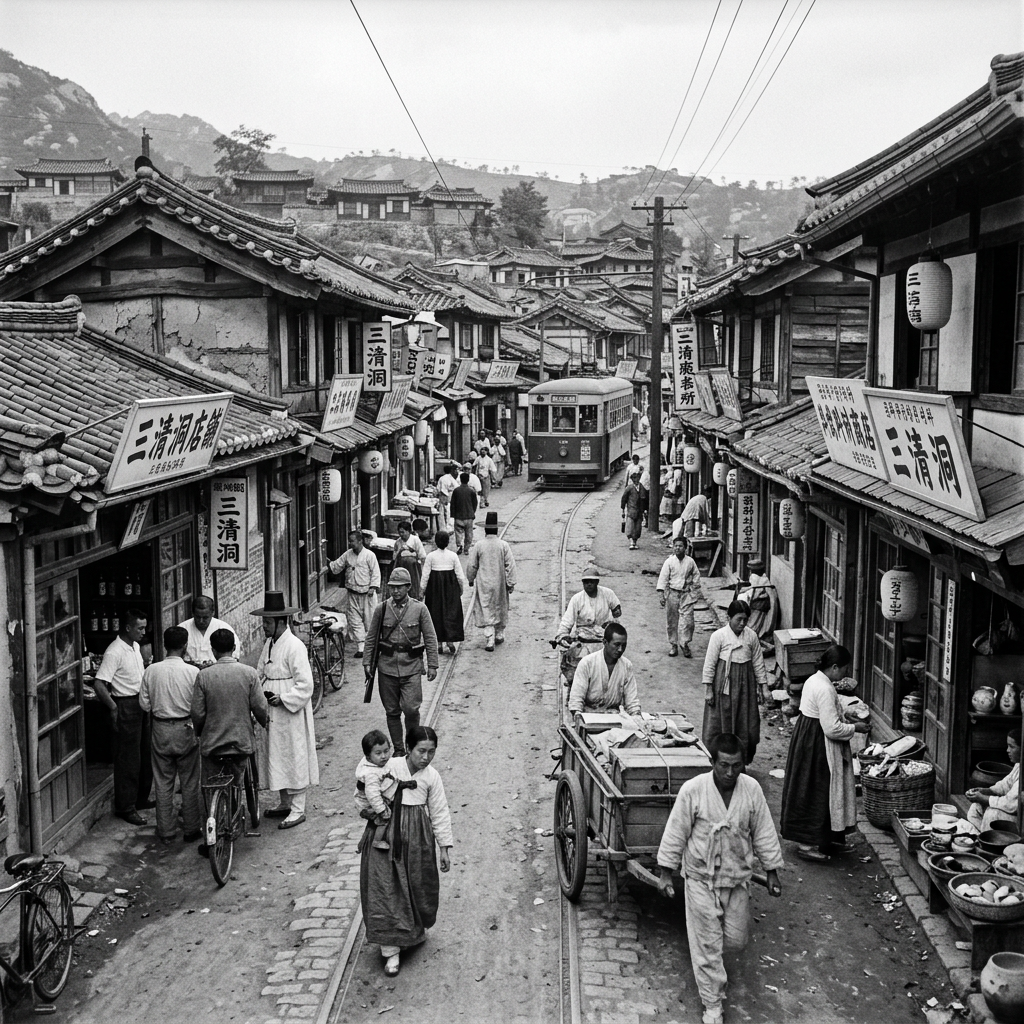
우리 외갓집의 이야기는 충북 충주와 진천에서 시작된다. 외할머니는 청주 부자집 딸이었고, 호적에는 이름 없이 ‘한씨’로만 올라 있었다. 외할아버지는 진천 평상신씨 집성촌 출신이었다. 일제강점기, 외갓집은 처음으로 복음을 접하고 온 가족이 크리스천으로 개종했다. 나는 외가 기준으로 크리스천 3세대다.
외증조부는 사위인 외할아버지를 일본으로 유학 보내 기술을 배우게 했다. 외할아버지는 삼청동에서 구두방을 운영하며 군인, 연예인, 작가들이 드나드는 근대적 공간에서 살았다. 일제 순경과는 말을 섞지 않았고, 독립운동가를 다락에 숨겨준 적도 있었다.
삼청동 시절, 엄마는 골목에서 을동이 아줌마와 소꿉놀이를 하며 자랐다. 을동이는 훗날 배우가 된 김을동, 그리고 그녀의 아버지는 독립운동가 김좌진 장군의 아들 김두환이었다. 엄마는 가끔 골목에 양복 차림의 남자들이 일렬로 서서 김두환을 향해 회합하던 장면을 기억했다. 그 시절 삼청동은 독립운동가, 지식인, 예술가들이 오가던 동네였다. 엄마는 골목에서 이광수 아저씨가 지나가던 모습도 기억한다고 했다. 학교에서는 개성으로 소풍을 갔던 기억도 있다. 엄마는 그때 본 개성의 풍경을 평생 잊지 못했다.
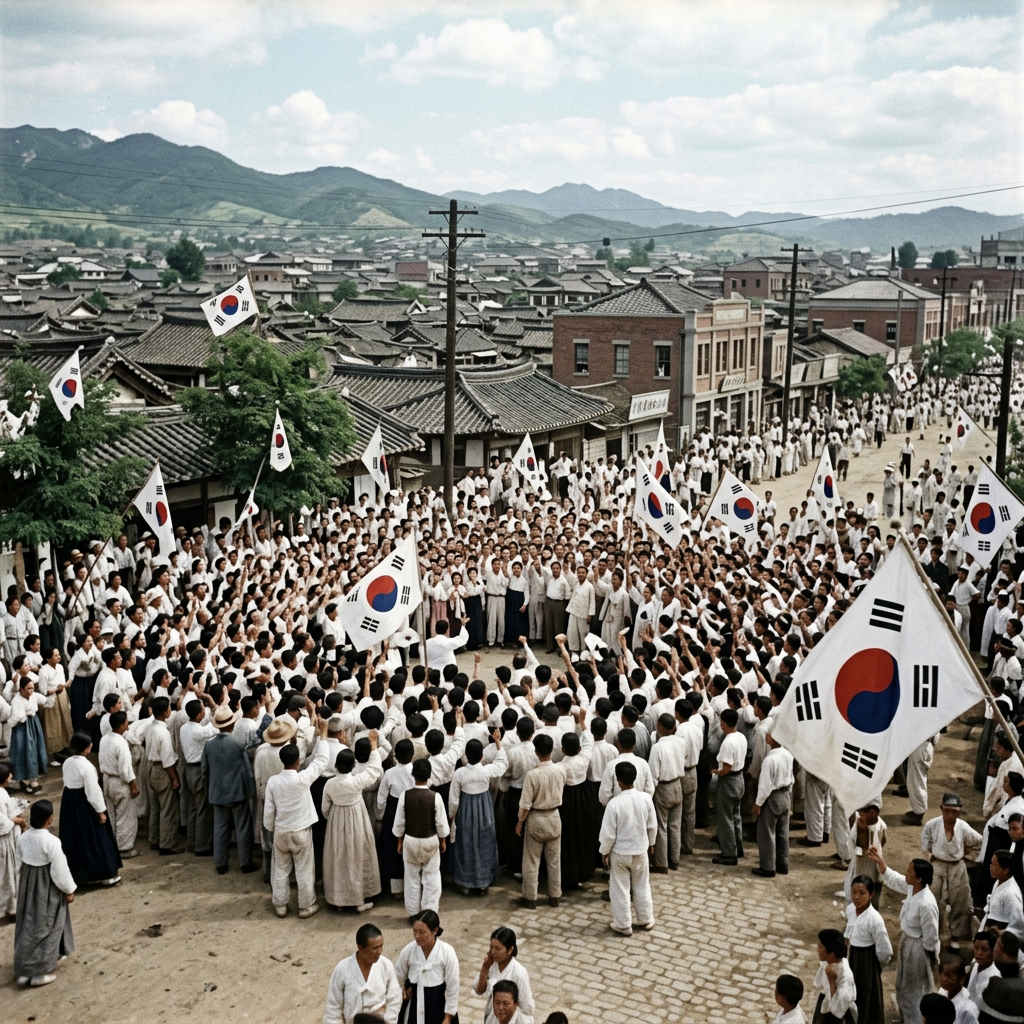
그러나 해방 후 사람들은 겉으로 보이는 것만 보고 외할아버지를 친일로 오해했다. 구두방은 더 이상 북적이지 않았고, 외가의 삶은 빠르게 가난 속으로 빨려들어갔다. 하지만 외할아버지의 삶은 생계를 위한 기술과 양심을 지킨 삶이었다.
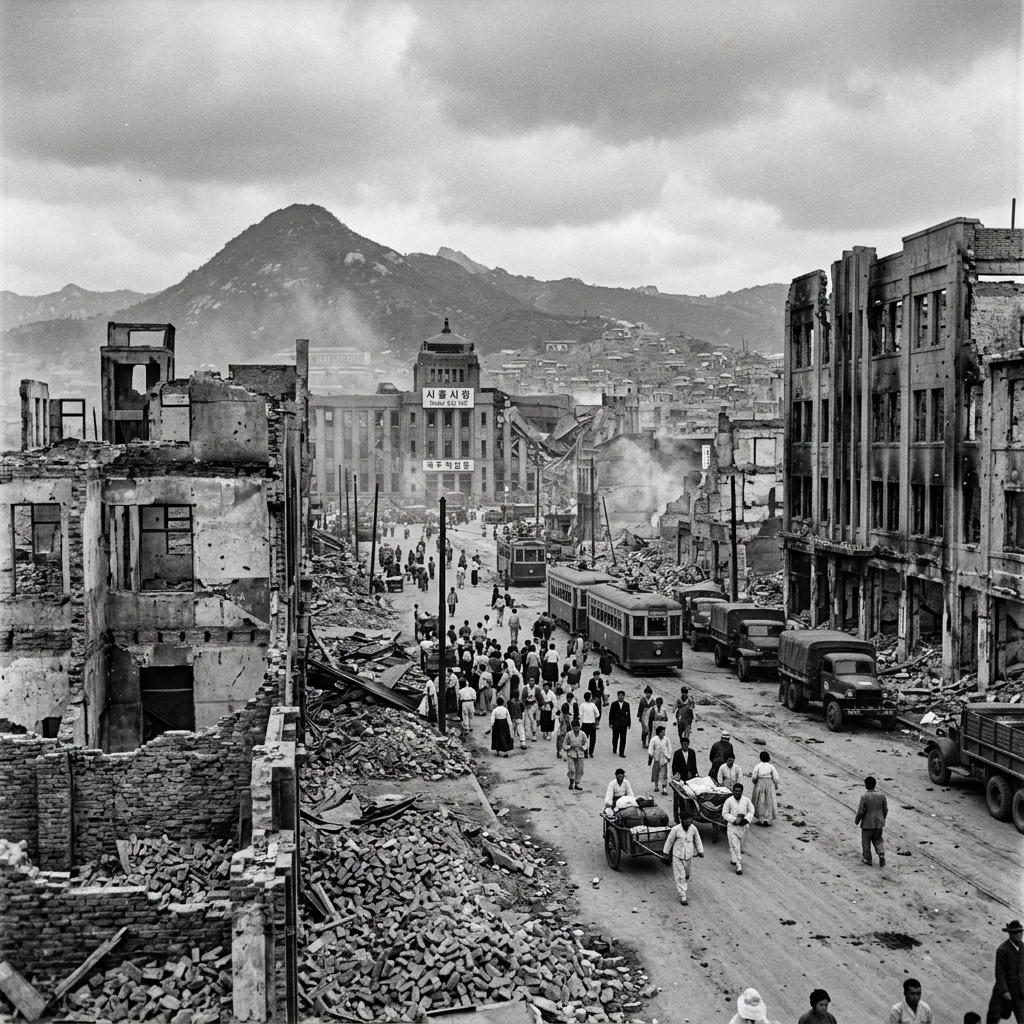
그러던 중 한국전쟁이 터졌다. 외삼촌은 경기중, 이모는 배화여중, 엄마는 삼청 국민학교 6학년이었다. 내년에 이화를 갈지 배화를 갈지 고민하던 시기였다. 한강다리가 폭파되고, 폭탄은 머리 위로 떨어지고, 인민군은 젊은 학생들을 잡아가 인민군으로 편성하려고 집집마다 들이닥쳤다. 외삼촌은 할아버지가 만든 마루 밑 굴속에 며칠 동안 숨어 있었다.
밤에 할아버지가 섭외한 뱃사공을 따라 외삼촌과 할아버지가 먼저 도강했고, 나중에 외할머니와 이모, 엄마도 도강에 성공했다. 엄마는 그때 담임겸 음악 선생님이 인민군이 들어오자마자 북한 장교 군복을 입고 아이들에게 북한 국가를 가르쳤다고 했다. 엄마는 그 노래를 지금도 기억하고 있다. 어린 엄마의 눈으로 본 당시 서울은 이웃집의 평범한 아저씨, 아줌마, 언니들이 나중에 알고보니 사회주의에 물들은 빨갱이들이었고, 인민군이 서울을 점령하자마자 그 사람들이 더 잔혹하게 서울 시민을 괴롭히며 공산당에 가입하지 않으면 잔인하게 죽이기까지 했다고한다.
남쪽으로 걸어 내려가며 이불보따리와 솥을 이고 지고 산을 넘고 강을 건너 진천에 도착했다. 그곳에도 이미 빨갱이들이 있었다. 외갓집은 동네 사람들과 왕래를 끊고 조용히 숨어 지냈다.
어느 날 국군 패잔병이 집으로 숨어들었는데, 외할아버지는 외삼촌이 누워 있는 이불 속에 그를 숨겨주었다. 그 사람은 다음 날 살아서 도망갈 수 있었다. 절체절명의 순간에도 외할아버지는 근본을 놓지 않았다.
서울이 수복되자 외갓집은 다시 삼청동으로 돌아갔다. 하지만 전쟁 뒤의 삼청동은 더 이상 옛날의 삼청동이 아니었다. 외가 집은 폭탄이 떨어져 뼈대만 남아 있었다. 할아버지는 삼청동을 정리하고 강 건너 청담동에 작은 집과 땅을 마련했다. 허허벌판이던 청담동에서 외갓집은 다시 삶을 시작했다.
그리고 그로부터 10년 후, 내가 뚝섬에서 태어났다. 외가의 시대는 그렇게 끝나고, 나의 시대가 그곳에서 시작되었다.
My maternal family’s story begins in Chungju and Jincheon, two towns in North Chungcheong Province. My grandmother was born into a wealthy family in Chungju, yet her name was never recorded—only “Han” appeared in the family registry. It reflects the reality many women faced in that era. My grandfather came from the Pyongsang Shin clan village in Jincheon. During the Japanese occupation, my maternal family encountered Christianity for the first time and converted as a whole. By that lineage, I am a third‑generation Christian on my mother’s side.
My great‑grandfather sent his son‑in‑law—my grandfather—to Japan to study and learn a trade. It was rare at the time for a father‑in‑law to support a son‑in‑law’s overseas education. My grandfather later ran a shoe shop in Samcheong‑dong, where soldiers, entertainers, writers, and intellectuals often visited. He refused to speak with Japanese police officers and even hid independence activists in the attic.
During those peaceful years in Samcheong‑dong, my mother played in the alleys with a neighborhood girl everyone called Euldong. She was Kim Euldong, the daughter of Kim Doo‑hwan, son of independence fighter General Kim Jwa‑jin. My mother remembers seeing rows of men in suits standing in front of Euldong’s house, gathered for meetings with her father. Samcheong‑dong at that time was a neighborhood where independence activists, writers, and artists lived side by side. My mother also remembers seeing writer Lee Kwang‑su walking through the alleys. Her school once took a field trip to Kaesong, and she never forgot the scenery she saw there.
After liberation, people judged my grandfather only by appearances and mistakenly labeled him a collaborator. The shop lost its customers, and the family quickly fell into hardship. But his life had been one of honest work, skill, and conscience.
Then the Korean War broke out. My uncle was a student at Kyunggi Middle School, my aunt attended Baehwa Girls’ Middle School, and my mother was a sixth‑grader preparing to choose between Ewha and Baehwa for her next school. Everything changed overnight.
The government blew up the Hangang Bridge, making escape nearly impossible. Bombs fell overhead, and North Korean soldiers stormed into homes, searching for young boys to conscript. My uncle hid for days in a crawlspace beneath the floor that my grandfather had built.
When North Korean forces entered Seoul, my mother witnessed something she never forgot.
Her homeroom teacher—someone who had always seemed quiet and ordinary—put on a North Korean uniform and began teaching the children the North Korean anthem.
Only later did my mother understand that many seemingly ordinary people in the neighborhood had already been influenced by socialist ideology long before the war.
She heard stories that some of these local collaborators acted with more cruelty than the soldiers who had crossed down from the North.
It was a time when trust collapsed overnight, and familiar faces revealed unexpected allegiance
At night, my grandfather arranged a boatman and crossed the river with my uncle first. Later, my grandmother, aunt, and mother managed to cross as well. My mother remembers the fear of that night more than anything else.
The family walked south, carrying bedding bundles and cooking pots on their heads, crossing mountains and rivers until they reached Jincheon. But even there, communist forces were already present. My maternal family avoided all contact with villagers and lived quietly, interacting only with close relatives.
One night, a stranger—clearly a retreating South Korean soldier—ran into their home seeking refuge. My grandfather hid him under the blanket where my uncle was lying. The man escaped safely the next day. Even in life‑or‑death moments, my grandfather never abandoned his principles.
After Seoul was recaptured, the family returned to Samcheong‑dong. But the neighborhood was no longer the same. Their house had been hit by a bomb and was left with only its frame standing. My grandfather quickly settled matters and moved the family across the river to Cheongdam‑dong, buying a small house and a piece of land. Cheongdam‑dong was then an empty field, a place for people starting over after the war.
Ten years after that move, I was born. The era of my maternal family came to a close, and my own era began there.
