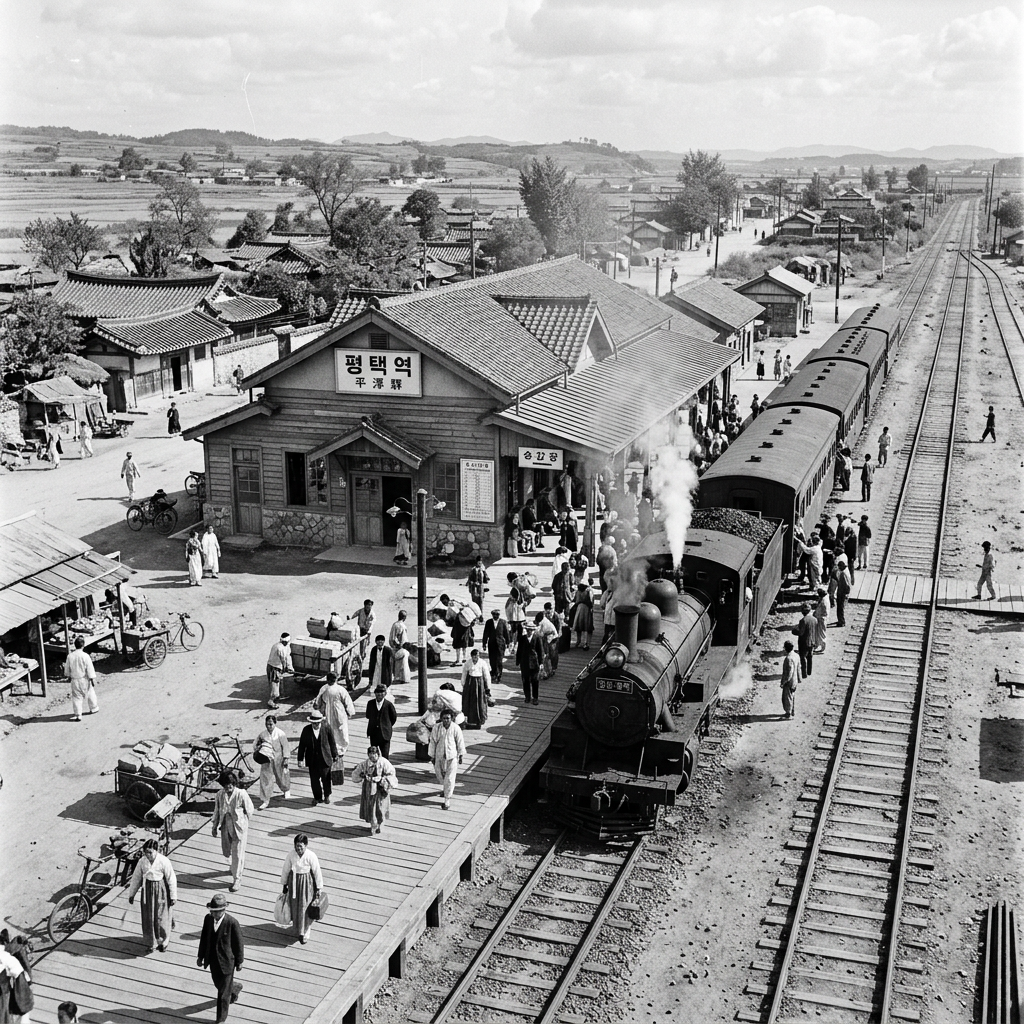
〈Grandmother’s Time〉
My grandmother was born in Anseong and married into a family in Pyeongtaek at the age of sixteen. For women of her generation, marriage was not a beginning but a burden. Life as a young bride meant endurance—layer upon layer of expectations, chores, and silent obedience. She watched elders pass away one by one, and with each loss, more responsibility fell onto her small shoulders.
Taking care of the meals for the numerous workers residing in the guest quarters, stoking the fireplace in winter, and mending and sewing countless clothes seasonally to attend to their needs was one of the tasks my grandmother had to perform during her newlywed days. One day, a needle from a hand-cranked sewing machine pierced straight through her finger. The twisted shape of that finger remained for the rest of her life. She never hid it. It was the mark of her labor, the proof of a life lived through hardship.
Her marriage was loving, though even that love was not free. Her mother-in-law and grandmother-in-law, both widowed early, sometimes slipped into the young couple’s room at night and lay down between them. Privacy was a luxury a young bride could not afford. Still, my grandmother endured. She endured everything with a quiet determination, hoping that someday she would live peacefully with her husband and children.
But that hope was short-lived. My grandfather fell ill with tuberculosis and passed away young. Her long years of endurance—her own kind of wasing-sangdam, a life of grit and patience—ended abruptly and without reward.
After losing her husband, two young children, and later her two older sisters, my grandmother became truly alone. Women of her era could not freely visit relatives or wander outside the home. Even going to her parents’ house required permission. And Anseong to Pyeongtaek was a day and a half on foot. Distance itself became another wall of loneliness.
Yet in that loneliness, she made one bold choice. After becoming a widow, she tidied up the household finances and took her first long trip— a journey to Mount Geumgang. It was the first time she left home for herself. Whenever she spoke of the mountain’s beauty, her face brightened. For a moment, she was not a weary daughter-in-law or a lonely widow, but a traveler who had walked her own path.
Back in Pyeongtaek, she built a quiet but steady life. She learned to read Korean through the Bible, sat in the front yard reading newspapers, and became the unofficial “village captain,” checking on neighbors and keeping the community connected. She loved salty food and sang hymns in a clear soprano voice.
Every year before the first full moon of the lunar calendar, she made taffy from thickened grain syrup. The kitchen stayed warm all day, and the sweet smell filled the entire house. I hovered near the kitchen, waiting for a small piece. In those days, treats were rare, and sweetness was precious.
My grandmother’s small cloth pouch—her ssamji—always held a few candies and some crumpled bills. As a child, I believed that even if the Han River dried up, her pouch would never run out. She would open it, pull out a candy, and place it gently in my palm. In that moment, I felt like the most cherished child in the world.
She favored my younger brother, the fourth-generation only son, yet whenever we fought, she always took my side. I was her little mirror—her mini-me. I watched everything she did, followed her movements, memorized her habits. I think she found that endearing, as if I understood her life more closely than anyone else.
Even after she passed away, she didn’t fully leave us. One night, she appeared in my mother’s dream, wearing a bright hanbok with a colorful saekdong jacket. In a cheerful voice she said, “Looks like another baby is coming into the family.” My mother dismissed it as a simple dream— until news arrived that my younger sister was pregnant.
My grandmother had always been lonely, yet she carried her loneliness with dignity. She lived through hardship, found small joys, and loved quietly but deeply. Her life began in struggle, moved through solitude, and ended in love.
And I still say, “When I go to heaven someday, I’ll find her by her finger.” The finger twisted by the sewing machine needle— the same finger my grandfather said he would look for when he waited for her in the afterlife.
My grandmother’s time was a gentle, quiet story. And now, that story lives again through my memories.
🌿 〈할머니의 시간〉 — 한 여성의 생애를 따라 걷는 긴 에세이
할머니는 안성에서 태어나 열여섯 살에 평택으로 시집왔다. 그 시절 며느리의 삶은 견딤이었다. 층층시야 시집살이를 버티고, 집안 어른들이 하나둘 저승으로 가는 걸 지켜보며 할머니는 어린 나이에 이미 많은 짐을 짊어졌다.
사랑채에 거주하고있는 수많은 일꾼들의 매끼를 챙기고, 겨울엔 군불을 아궁이에 넣어주고, 시즌별로 수많은 옷들을 수선하고 다시 꿰매서 그들의 수발을 드는게 할머니의 신혼시절 해야했던 일들중 하나였다. 수동 재봉틀 바늘이 손가락을 관통했던 날, 그 뒤틀린 손가락은 평생 흉터로 남았다. 하지만 할머니는 그 손가락을 부끄러워하지 않았다. 그건 고생의 흔적이었고 자신이 살아낸 삶의 증표였다.
할아버지와의 금술은 좋았다. 하지만 그 금술조차 시할머니와 시어머니의 외로움 앞에서는 가끔 심술의 대상이 되었다. 할머니가 할아버지와 한 방에 누워 있으면 시할머니가 방에 들이닥쳐 두 사람 사이에 누워 같이 잤다는 이야기. 그 시절 며느리에게는 사생활도, 부부의 공간도 허락되지 않았다.
그럼에도 할머니는 견뎠다. 와신상담처럼 버티고 또 버티며 언젠가 남편과 아이들과 편히 살 날을 꿈꿨다. 하지만 그 꿈은 너무 짧았다. 할아버지는 결핵으로 앓아누웠고 젊은 나이에 먼저 세상을 떠났다. 할머니의 와신상담은 그 순간 허무하게 끊어졌다.
남편을 잃고, 어린 두 자식을 잃고, 친정의 언니 둘도 먼저 떠나고, 친정 어른들까지 모두 세상을 떠나자 할머니는 말 그대로 혈연단신이 되었다. 그 시대 여성은 마실도 마음대로 못 다니고 친정 나들이도 허락받아야 했다. 안성에서 평택까지는 걸어서 하루 반 길. 보고 싶어도 갈 수 없는 거리였다.
그런 외로움 속에서 할머니가 과부가 된 뒤 처음으로 한 일은 집안 살림을 조금 정리해 금강산 유랑을 떠나는 것이었다. 시집온 뒤 처음으로 오랫동안 집을 떠난 여행이었다. 금강산의 수려함을 이야기할 때 할머니의 얼굴은 잠시 밝아졌다. 그 산은 할머니에게 자기 자신을 위해 걸은 첫 자유였다.
평택에 자리를 잡은 뒤 할머니는 조용하지만 단단한 삶을 이어갔다. 성경책으로 한글을 익히고 앞마당 의자에서 신문을 읽고 동네 사람들의 안부를 챙기며 ‘동네 대장’처럼 살았다. 짭짤한 음식을 좋아했고 찬송가를 소프라노로 맑게 부르셨다.
정월대보름이 다가오면 조청으로 엿을 만들었다. 부엌은 하루 종일 따뜻했고 달콤한 냄새가 온 집안을 감쌌다. 나는 그 냄새만 맡아도 기분이 좋아졌다. 그 시절엔 간식이 귀했고 달콤한 건 더 귀했다.
할머니의 쌈지에는 항상 사탕과 구겨진 돈 몇 장이 있었다. 나는 한강물이 마를지언정 할머니의 쌈지주머니는 마르지 않을 거라고 믿었다. 그 믿음은 어린아이의 세계에서는 완벽한 진실이었다. 할머니가 사탕을 꺼내 내 손바닥에 올려주던 그 순간, 나는 세상에서 가장 귀한 존재였다.
할머니는 남동생과 나를 많이 차별하셨다. 동생은 4대 독자였고 나는 맏딸이었다. 그 시대의 공기였다. 그럼에도 동생과 내가 싸우면 할머니는 항상 내 편을 들어주셨다. 나는 할머니의 미니미였다. 할머니가 하는 모든 일을 보고 배우고 눈속에 담고 다녔기에 할머니 눈엔 내가 기특해 보였던 것 같다.
할머니가 떠난 뒤에도 그분은 우리 가족을 완전히 떠나지 않았다. 어느 날 엄마 꿈에 나타나 밝은 한복치마와 색동 저고리를 입고 환한 목소리로 말했다.
“집안에 또 애기가 생기려나 보다.”
엄마는 그냥 꿈이려니 했지만 며칠 뒤 둘째동생의 임신 소식이 날아왔다. 할머니는 그렇게 꿈이라는 통로로 새로운 생명을 맞이하러 오셨다.
그리고 나는 말한다. “나도 천국 가면 할머니 손가락을 보고 찾을 거야.” 수동 재봉틀 바늘이 관통해 뒤틀린 그 손가락. 할아버지가 저승에서 그 손가락을 보고 찾겠다고 했던 약속. 그 약속을 나는 이어받았다.
할머니의 시간은 고생으로 시작해 외로움으로 이어지고 사랑으로 끝난 아주 조용한 서사였다.
그리고 지금, 그 서사는 내 기억 속에서 다시 살아난다.
