
Cross‑Border Marriages and the Instinct That Never Changes
Yesterday, I happened to hear a story about international marriages. At first, it felt like just another social phenomenon, something happening far away from my own life. But as the conversation unfolded, I began to see a pattern. Why do Korean rural men marry women from Southeast Asia? Why does the same thing happen in rural China? Why does the United States still have an entire industry built around mail‑order brides? As I followed the structure of these questions, I suddenly remembered the picture brides of a hundred years ago. That moment made me realize that modern international marriage is not a new trend at all—it is a repetition of an old survival mechanism.
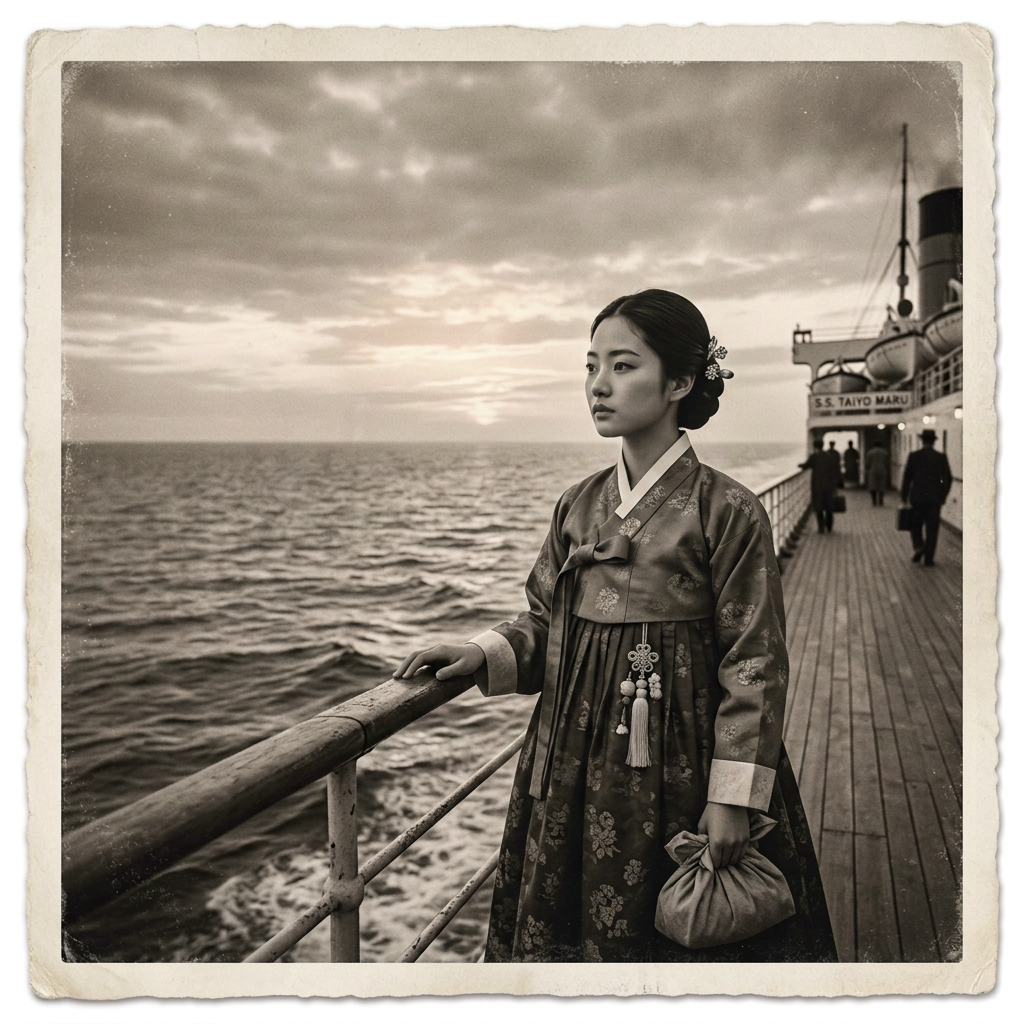
During the Japanese occupation, Korean men were sent to sugar plantations in Mexico and Hawaii. Those places were filled with men and had no women to marry. So brides crossed the Pacific after seeing nothing but a single photograph of their future husbands. When they arrived, many cried because the man waiting for them was twenty or thirty years older than the young face in the picture. Even then, people crossed borders to form families. Even now, people cross borders for the same reason. International marriage is not a modern invention; it is a century‑old pattern shaped by human necessity.
But today’s world is different. We are not living in isolated plantations with no women. We are not living in a time when marriage partners are physically absent. So why do so many men still look overseas for a spouse? The reasons are far more complex than “there are no brides.” Modern international marriage is driven by structural issues: gender imbalance in rural areas, economic decline, the collapse of local marriage markets, the difficulty of remarriage for middle‑aged men, cultural conflicts, and the desire of many women to migrate for a better life. People cross borders not because they lack options, but because their social conditions push them toward choices that feel inevitable.
And yet, within this structure, there is always a shadow. It is not only men who act with bad intentions, nor only women. In Korea, there are cases where Southeast Asian brides take advantage of their husbands, drain their money, and disappear within months. On the other hand, there are cases where husbands exploit or abuse their wives. Human malice does not belong to one gender. Wherever there is a power imbalance—economic, linguistic, cultural, or legal—someone will try to use it. The greater the imbalance, the more fragile the relationship becomes, and the easier it is for sincerity to be broken.
Whether the relationship crosses borders or begins in the same neighborhood, the essence of love is sincerity. To exploit someone’s trust, to treat their devotion as a toy, to use their heart as leverage—these are betrayals that cut the deepest. International marriage may be shaped by human instinct and social structure, but the pain that comes from broken sincerity is always personal.
The picture brides who crossed the Pacific a hundred years ago did so because they wanted to build a family. Today, people cross borders for the same reason. Across time and culture, humans carry an instinct to leave descendants, to create a home, to continue their lineage. That instinct can create love, tragedy, or migration. It can push people across oceans or into unfamiliar cultures. And within that instinctive structure, people still search for sincerity, still get hurt, and still want to believe in someone. Humans repeat these patterns because the instinct itself never changes.
어제 나는 우연히 국제결혼 이야기를 듣게 되었다. 처음엔 그저 흥미로운 사회 현상 정도로 생각했지만, 이야기를 따라가다 보니 어느 순간 구조가 보이기 시작했다. 왜 한국 농촌 총각들이 동남아 여성과 결혼하는지, 왜 중국 농촌에서도 같은 일이 반복되는지, 왜 미국에도 mail‑order bride라는 산업이 존재하는지. 그 흐름을 파헤치다 보니, 갑자기 100년 전 조선의 사진신부들이 떠올랐다. 현대의 국제결혼이 새로운 트렌드가 아니라, 이미 오래전부터 반복되어온 인간의 생존 방식이라는 사실이 머리를 스쳤다.
일제 강점기, 조선인 남성들이 멕시코와 하와이 사탕수수 농장으로 떠났을 때 그곳에는 남자만 있었다. 결혼 상대가 없었고, 가족을 만들 수 없었다. 그래서 신부들은 신랑의 사진 한 장만 보고 태평양을 건너갔다. 배에서 내려 실제 신랑을 봤을 때, 사진 속 젊은 남자와 전혀 다른 20~30년 많은 중년의 남자를 보고 알아보지 못해 울었다는 이야기는 지금도 생생하다. 그때도 사람들은 국경을 넘었고, 지금도 사람들은 국경을 넘는다. 국제결혼은 21세기의 새로운 트렌드가 아니라, 이미 100년 전에 존재했던 생존형 결혼이었다.
그런데 현대는 사탕수수 농장처럼 남자만 있는 환경도 아니고, 신부가 절대적으로 부족한 시대도 아니다. 그럼에도 왜 여전히 많은 남성들이 해외에서 배우자를 찾을까. 이유는 단순하지 않다. 한국 농촌의 성비 불균형, 지역 소멸, 경제적 불안정, 이혼 후 재혼 시장의 어려움, 미국 중년 남성들의 결혼난, 가치관 충돌, 그리고 더 나은 삶을 원하는 여성들의 이민 욕구까지. 현대의 국제결혼은 “신부가 없어서”가 아니라, 현대 사회가 만들어낸 복잡한 구조적 문제들 때문에 발생한다. 결국 사람들은 자신이 가진 조건과 욕망, 그리고 생존의 필요에 따라 다시 국경을 넘는다.
하지만 이런 구조 안에는 늘 어두운 그림자가 함께 존재한다. 남자만 나쁜 것도 아니고, 여자만 나쁜 것도 아니다. 한국에서도 동남아 여성과 결혼한 남성들이 신부에게 이용만 당하고, 돈을 빼앗기고, 몇 달 만에 잠적당하는 사례가 있다. 반대로 남편이 신부를 착취하거나 폭력을 행사하는 경우도 있다. 인간의 악의는 성별을 가리지 않는다. 권력 불균형이 생기는 곳에는 항상 누군가 그 구조를 이용하려는 사람이 생긴다. 경제력, 국적, 언어, 정보, 나이. 이런 차이가 커질수록 관계는 더 취약해지고, 진심은 더 쉽게 훼손된다
국경을 넘는 결혼이든, 같은 동네에서 만난 사랑이든, 관계의 본질은 결국 마음이다. 누군가의 진심을 이용하고, 순정을 장난처럼 다루고, 상대의 믿음을 무기로 삼는 행동은 어떤 시대에도, 어떤 나라에서도 가장 큰 배신이다. 국제결혼이라는 구조는 인간의 본능과 사회적 조건이 만들어낸 오래된 패턴이지만, 그 안에서 벌어지는 배신은 언제나 개인의 마음을 가장 깊게 상처낸다.
100년 전 사진신부들이 태평양을 건너던 이유도, 지금 사람들이 국경을 넘는 이유도 결국 하나다. 인간은 시대와 문화를 넘어, 자손을 퍼뜨리고 가족을 만들고 싶은 본능을 가지고 있다. 그 본능은 때로는 사랑을 만들고, 때로는 비극을 만들고, 때로는 국경을 넘게 만든다. 그리고 그 본능이 만들어낸 구조 속에서, 사람들은 여전히 진심을 찾고, 여전히 상처받고, 여전히 누군가를 믿고 싶어 한다. 인간은 그렇게 반복하며 살아간다.
