
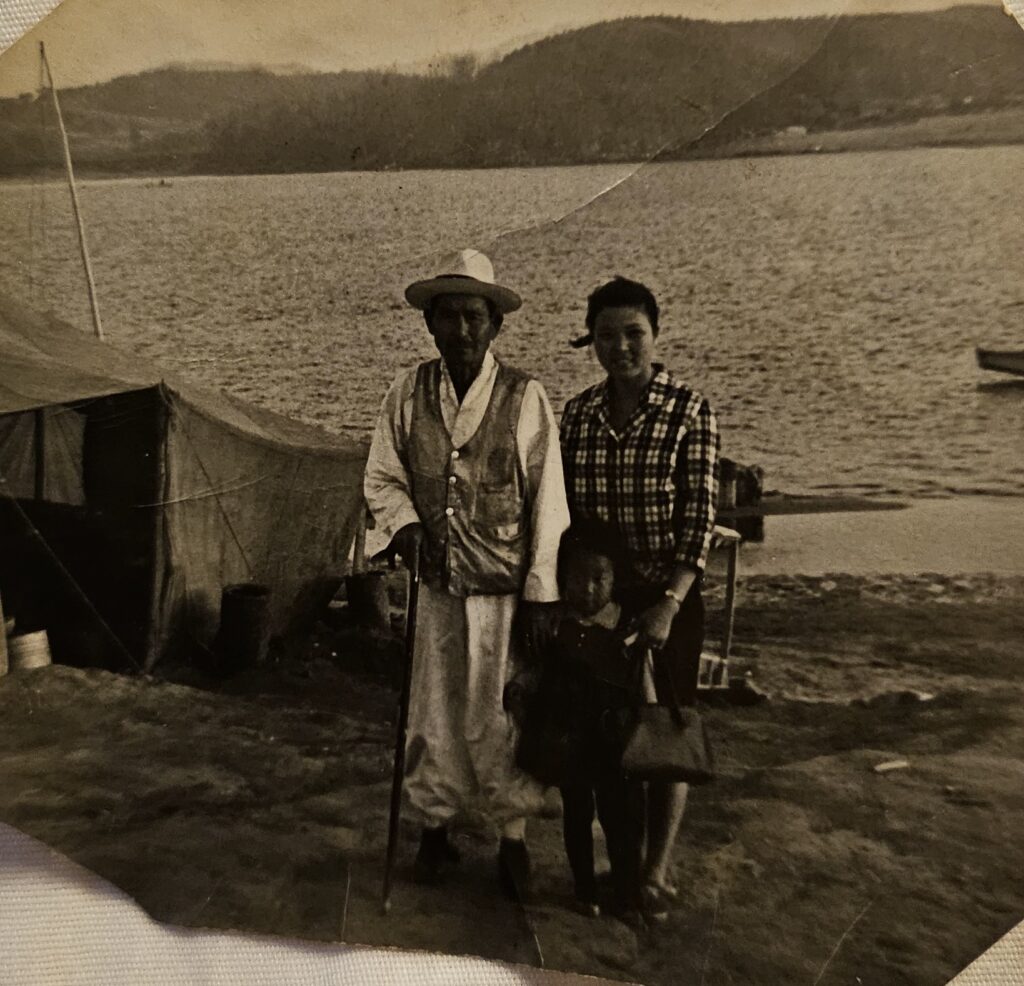
위의 사진은 외할아버지와 엄마와 함께 찍은 사진. 강건너 보이는 산등성이 60년 전의 청담동이다 The photo above was taken with my maternal grandfather and mother. The mountain ridge visible across the river is Cheongdam-dong from 60 years ago.
I was born in Ttukseom. The year I was born was a famine, so seaweed was as expensive as gold. My mother couldn’t eat seaweed soup properly after giving birth to me, so I had to be weaned early.
Across the river, at my maternal grandparents’ house in Cheongdam-dong, there was a goat. My grandmother milked that goat and fed it to me. That is how I survived.
When I was about six months old, while my grandmother briefly went to the bathroom, a disabled veteran wounded in the Korean War reportedly saw me lying on the porch, found me so pretty, and snatched me up and disappeared.
The house was in mourning. My grandmother cried and wailed, and my parents quit their jobs to search the neighborhood for me. A week later, the disabled veteran brought me back. and said, “I took your baby because she is so pretty. but I am returning her back because I am not in a position to raise her.” That is how I came back. It was essentially kidnapping at a young age.
Instead of my busy parents, I grew up in the care of my maternal grandmother across the river in Cheongdam-dong. So my childhood was between Ttukseom and Cheongdam-dong. Cheongdam-dong was not the Cheongdam-dong of today.
There were radish fields, fresh spring water, and goats, and Bongeunsa Temple was as close as a neighborhood playground. On the way back from visiting Bongeunsa Temple holding the hand of the older girl next door, we would pull radishes from the field, wash them in the stream water below the rice field and eat them as we walked home. That was the scene of my childhood.
One day, my maternal grandmother went around the neighborhood calling out my younger brother’s name loudly due to his dispearence.. It turned out that the neighborhood men had fed him makgeolli-rice wine instead of water while having a midday snack in the rice paddies, and he was lying asleep on the riverbank drunk.
My parents confronted the men later, but it ended as just a day’s incident typical of those times. Those men and grandfathers who worked in the paddies and fields dragging manure carts became overnight millionaires a few years later as land prices skyrocketed.
Their children later became the “Orange Tribe.” I belong to the generation that witnessed that change with their own eyes.
I grew up between Ttukseom and Cheongdam. When the river wind blew, the smell of Ttukseom drifted across, and behind our house, the pine trees brushed against each other with a soft, dry whisper. In winter, the Han River froze and people walked across the ice, and on summer nights I lay on the outdoor mat watching the Big Dipper and Orion until I fell asleep. Seoul was a place where the gray scent of Jongno and Euljiro mixed with the pine breeze of Cheongdam’s hillside, and I was a quiet child growing up in between.
The pine hill behind our house was my playground. In spring, my grandmother collected pine pollen, and when my younger brother misbehaved, she would snap off a pine branch and chase him with it. None of us were ever hit; it was simply how grandmothers of that era scolded children. Whenever she went up the hill to gather firewood, I followed behind her, carrying a dry twig in my small hands. I was a child who learned early to carry my own share.
In winter, the Han River froze. The deep middle section often formed thin ice, and accidents happened when people misjudged the frozen path at night. I remember crossing the river holding my mother’s hand. I was the smallest and lightest, so I walked ahead with quick steps while she followed carefully behind. The river was narrower then, and such crossings were possible. I still remember the faint tremble of the ice beneath my feet and the quiet sound of water moving under the frozen surface.
My father sometimes took me to Jongno and Euljiro. The alleys between them were packed with workshops— metal shops, electrical parts, machine components, and even a man who sharpened knives on the street. The smell of grinding metal and the smoky air created a gray landscape unique to that part of Seoul. To me, the city was a mixture of Cheongdam’s pine breeze and Jongno’s iron scent.
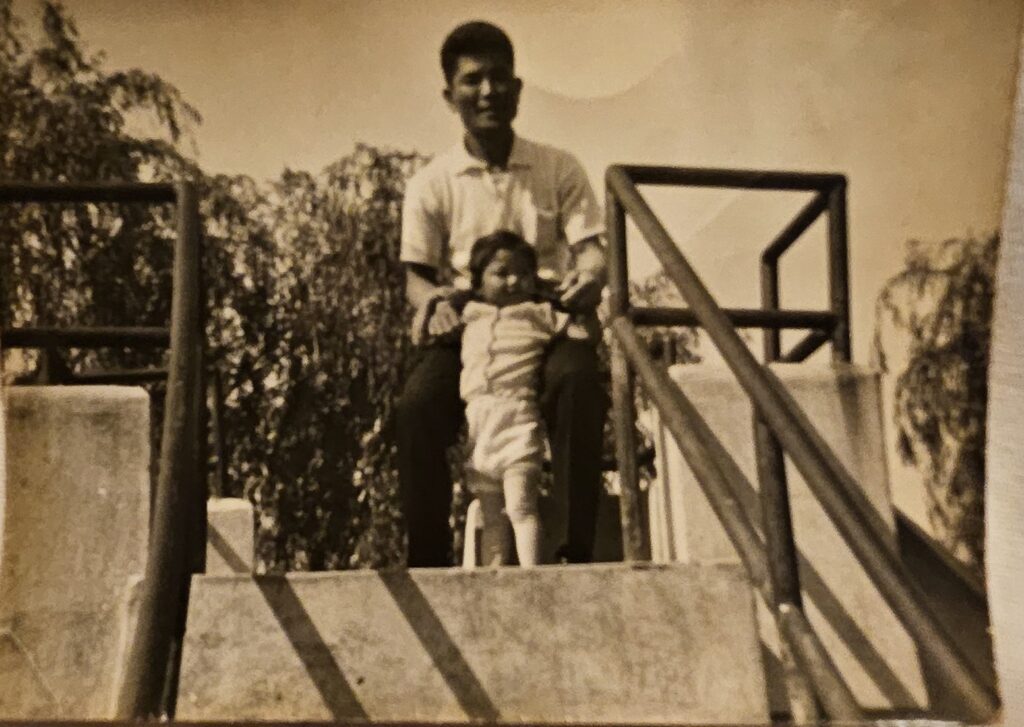
아버지와 나 Father and I
Our house didn’t have hot water, so going to the public bath once a week was a big event. One winter day, after washing and putting on clean clothes, I slipped on the muddy, melting snow outside and fell straight into the dirty slush. My father picked me up without a word and marched me right back into the bathhouse, while my mother ran home to fetch new clothes. Such small mishaps were common then, and we simply lived through them.
I entered first grade unable to read or write Korean properly. One day, I wandered into the only comic shop in the neighborhood and picked up The Sound of Music by Hwang Mina. As I followed the flow of the drawings, the scattered syllables I barely recognized suddenly connected in my mind. In that moment, the Korean alphabet opened itself to me. After that, I often took a bus to the next town, wandered through the market, and rode the bus back home. It was the kind of small adventure children of that era could freely have.
When my youngest sibling was born, my father handed me some money and said, “Take your brother and sister to the comic shop.” I held their hands and ran to the only comic shop in town. We spent hours reading, sharing snacks, and waiting for the day to pass. By late afternoon, when we returned home, my mother had given birth and my grandmother was tending to her with a warm bowl of seaweed soup. That was how new siblings arrived then— quietly, naturally, at home. And I grew up quietly within all those scenes.
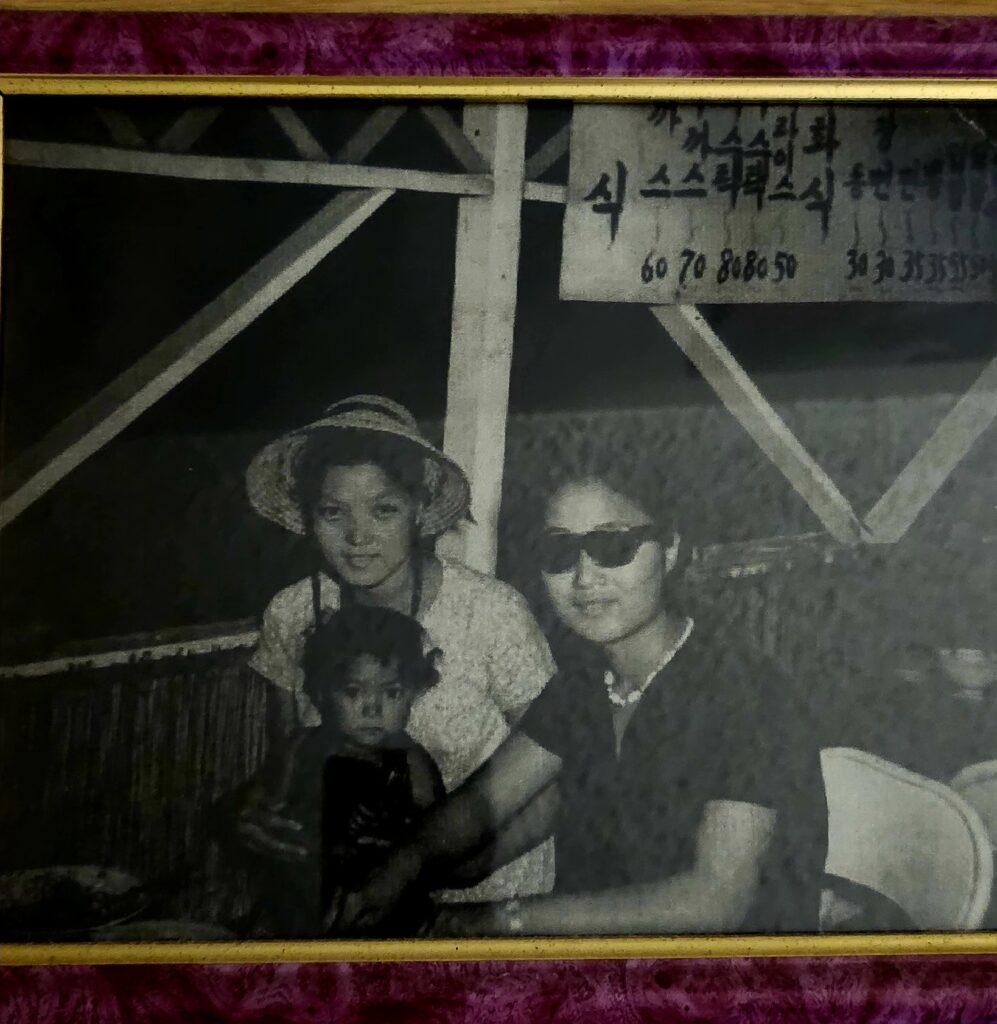
뜩섬 유원지의 중국식당에서 엄마가 나를 앉고 엄마친구 와 함께 식사중, 뒤에 메뉴표에 짜장면이 30원 하던 시절 Mom is holding me while she eats with her friend at a Chinese restaurant in Tteukseom Recreation Area; this was back when Jajangmyeon cost 30 won on the menu in the background.
나는 뚝섬에서 태어났다. 내가 태어난 해는 흉년이라 미역값이 금값이었다. 엄마는 나를 낳고 미역국을 제대로 먹지 못했고 그래서 나는 엄마 젖을 일찍 떼야 했다. 강 건너 청담동 외가에는 염소 한 마리가 있었다. 외할머니는 그 염소젖을 짜서 나에게 먹여주셨다. 나는 그렇게 살아남았다.
내가 여섯 달쯤 되었을 때, 할머니가 잠깐 화장실 간 사이 한국전 참전 중 부상당한 상이용사가 퇴청 마루에 누워 있던 나를 보고 너무 예뻐서 번쩍 안아 사라졌다고 한다. 집안은 초상집이었다. 할머니는 울고불고, 부모님은 일을 때려치우고 동네를 뒤지며 나를 찾았다. 일주일 뒤, 그 상이군인은 나를 다시 데려왔다. “애기가 너무 예뻐서 그만 데려갔습니다. 제가 키울 형편이 안 돼서 돌려드립니다.” 그렇게 나는 돌아왔다. 어린 나이에 납치를 당한 셈이다.
나는 바쁜 부모님 대신 강 건너 청담동 외할머니 품에서 자랐다. 그래서 내 어린 시절은 뚝섬과 청담동 사이에 있었다. 청담동은 지금의 청담동이 아니었다. 무밭이 있었고, 도랑물이 있었고, 염소가 있었고, 봉은사가 동네 놀이터처럼 가까웠다.
옆집 언니 손을 잡고 봉은사 절에 놀러 갔다가 돌아오는 길에 무밭에서 무를 뽑아 뚝 밑 도랑물에 씻어 먹으며 집으로 돌아오던 길. 그게 내 어린 시절의 풍경이었다.
어느 날은 외할머니가 남동생 이름을 크게 부르며 동네를 찾아 다니셨다. 알고 보니 동네 아저씨들이 논에서 새참 먹다가 물 대신 막걸리를 먹여서 애가 술에 취해 강둑에 누워 자고 있었다. 부모님이 나중에 아저씨들에게 따졌지만 그냥 그 시절의 헤프닝으로 끝난 하루였다.
그렇게 똥지개 끌고 논과 밭에서 일하던 아저씨, 할아버지들이 몇 년 뒤 땅값이 폭등하면서 하루아침에 벼락부자가 되었다. 그 자식들이 나중에 오렌지족이 되었다. 나는 그 변화를 눈으로 본 세대다.
나는 뚝섬과 청담동 사이에서 자란 아이였다. 강바람이 불면 뚝섬 냄새가 건너오고, 집 뒤 소나무 숲에서는 솔잎이 서로 부딪히며 사각사각 소리가 나던 시절이었다. 겨울이면 한강이 얼어 사람들은 얼음 위를 걸어 건넜고, 여름밤이면 평상에 누워 북두칠성과 오리온을 바라보며 잠들었다. 서울은 종로와 을지로의 회색빛 냄새와 청담동 뒷동산의 솔바람이 함께 섞여 있는 곳이었고, 나는 그 사이에서 조용히 자라난 아이였다.
집 뒤의 소나무 숲은 내 어린 시절의 놀이터였다. 봄이면 할머니가 송화가루를 채취하시고, 남동생이 말 안 들으면 소나무 가지를 꺾어 들고 “야!” 하고 쫓아가시곤 했다. 하지만 우리 중 누구도 맞아본 적은 없었다. 그저 겁만 주던, 그 시대 할머니들의 방식이었다. 나는 할머니가 뒷동산에 나무하러 가시면 작은 손으로 마른 줄기 하나 들고 뒤따라 내려오곤 했다. 어려서부터 내 몫은 스스로 챙기는 아이였다.
겨울이면 한강이 얼었다. 강 한가운데 깊은 곳은 살얼음이 많아 밤에 잘못 들어서면 사고가 나기도 했다. 나는 엄마 손을 잡고 그 얼음길을 건넌 기억이 있다. 가장 작고 가벼웠던 내가 먼저 성큼성큼 걸어가고 엄마는 뒤에서 조심스레 따라오셨다. 그 시절의 한강은 지금처럼 넓고 깊은 강이 아니었기에 가능했던 일이다. 발밑 얼음이 살짝 울리는 느낌과 얼음 아래로 물이 흐르는 작은 소리가 아직도 기억 속에 남아 있다.
아버지는 가끔 나를 데리고 종로와 을지로를 가셨다. 종로와 을지로 사이의 골목길에는 없는 것이 없을 만큼 온갖 기업사들이 빽빽하게 들어서 있었다. 쇠를 갈아주는 아저씨도 있었고, 기계 부품과 철물, 전기 부품들이 좁은 골목마다 쌓여 있었다. 쇠가 갈릴 때 나는 냄새와 메케한 연기가 공기 속에 섞여 그곳만의 회색빛 풍경을 만들었다. 나에게 서울은 청담동의 솔바람과 종로의 쇠 냄새가 함께 존재하는 도시였다.
우리 집에는 뜨거운 물이 잘 나오지 않아 일주일에 한 번 목욕탕에 가는 것이 큰 행사였다. 겨울 어느 날, 눈이 녹아 질척해진 길을 걸어 목욕탕에 가서 깨끗하게 씻고 새 옷을 입고 나왔는데 그 흑탕길에서 내가 미끄러져 넘어졌다. 아버지는 나를 번쩍 들어 말도 없이 다시 목욕탕으로 데려가셨고 엄마는 집으로 뛰어가 새 옷을 다시 가져오셨다. 그 시절엔 그런 해프닝이 흔했고 우리는 그저 그렇게 살아갔다.
나는 국민학교 1학년이 되었는데도 한글을 제대로 읽고 쓰지 못했다. 그러다 어느 날, 동네에 하나뿐인 만화방에서 황미나의 사운드 오브 뮤직을 우연히 집어 들었다. 그림의 흐름을 따라가다 보니 뜨문뜨문 읽던 글자가 갑자기 하나로 이어지기 시작했다. 그 순간, 한글이 내 눈앞에서 열렸다. 글을 알게 된 뒤로 나는 옆 동네로 가는 버스를 타고 시장 구경을 하고 다시 버스를 타고 집으로 돌아오는 작은 모험을 즐기곤 했다. 그 시절엔 그런 일이 아이들에게 흔한 하루였다.
막내동생이 태어나던 겨울, 아버지는 나에게 돈을 쥐어주며 “동생들 데리고 만화방 갔다 와라” 하셨다. 나는 남동생과 둘째 동생 손을 잡고 동네에 하나뿐인 만화방으로 달려갔다. 몇 시간을 만화책 보며 놀고 동생들 먹을 것도 챙겨주고 늦은 오후에 집에 돌아오니 엄마는 막내동생을 낳으셨고 할머니는 뒷처리를 하며 엄마에게 뜨끈한 미역국을 주고 계셨다. 그 시절엔 동생들이 그렇게 한 명씩 조용히, 자연스럽게 집 안에서 태어나던 때였다. 나는 그 모든 풍경 속에서 조용히 자라난 아이였다.
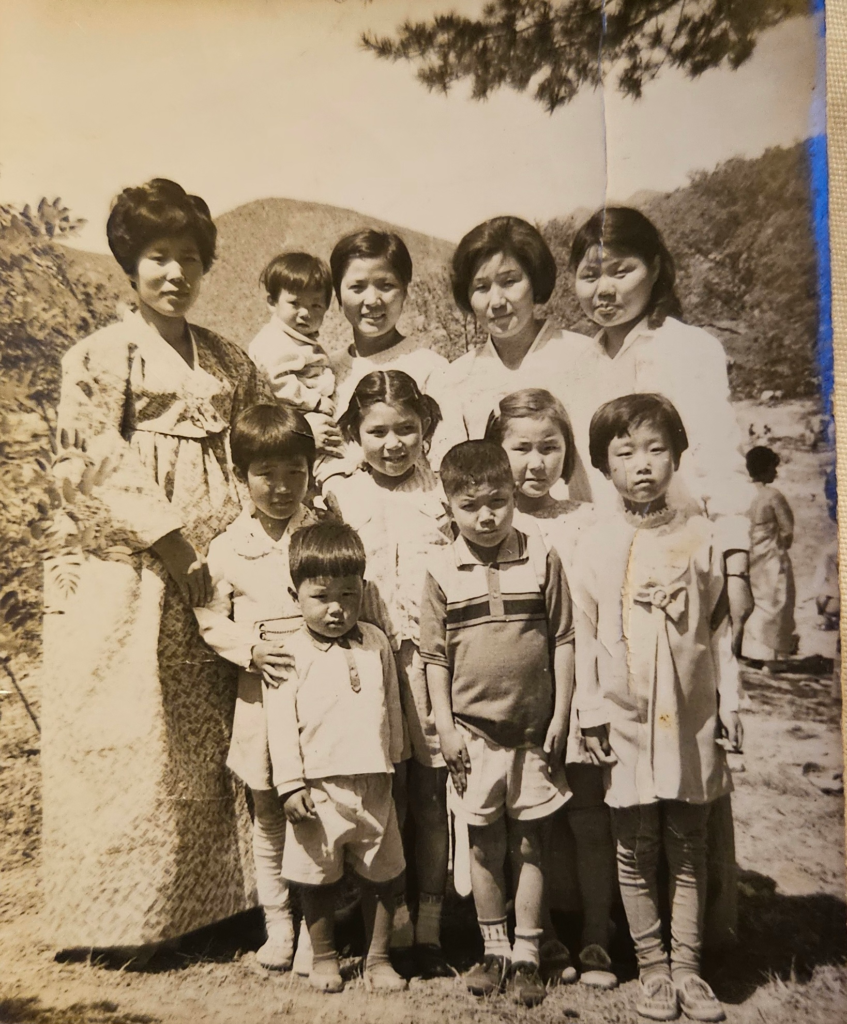
반친구들과 소풍간날, 뒷줄의 엄마는 둘째 동생을 안고 계시고 그앞이 나, 내앞에 있는 아이가 남동생, 뒷줄 웬쪽 끝에 계신분이 국민학교 2학년때 담임 선생님. .On the day I went on a picnic with my classmates, my mother in the back row was holding my second younger sibling, and I was in front of her, the child in front of me was my younger brother, and the person at the far left of the back row was my teacher from when I was in the second grade of elementary school.
