
Odysseia Review — A Man Shaken by the Violence of Invisible Gods
Odysseia was not merely a long film. For me, it was a journey that pushed the violence of invisible gods and the helplessness of a single human to its limits. The film does not portray Odysseus as a hero. He is not the cunning, unreliable man from the original myth. Instead, he is reinterpreted as a victim caught in the emotional currents and rigid order of the gods.
What struck me most was this: Throughout the entire long film, the gods never appear. In Greek mythology, we expect divine commands, prophecies, interventions— but the movie erases all of them.
Instead, the screen is filled with monsters, nymphs, and witches. Scylla, Charybdis, Calypso, Circe— they all appear like agents executing the gods’ unseen order.
Yet no one receives a prophecy. No one follows a divine command. No one suffers divine punishment directly.
Except Odysseus.
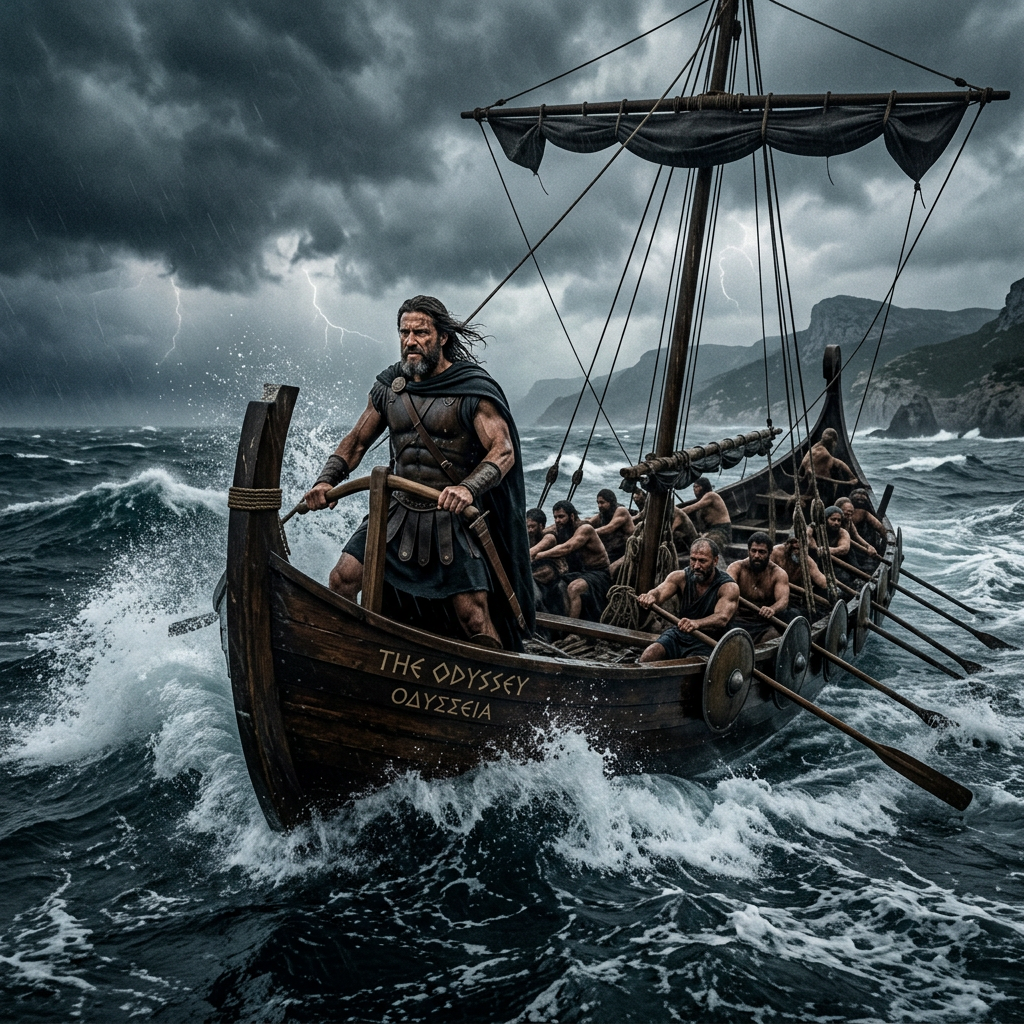
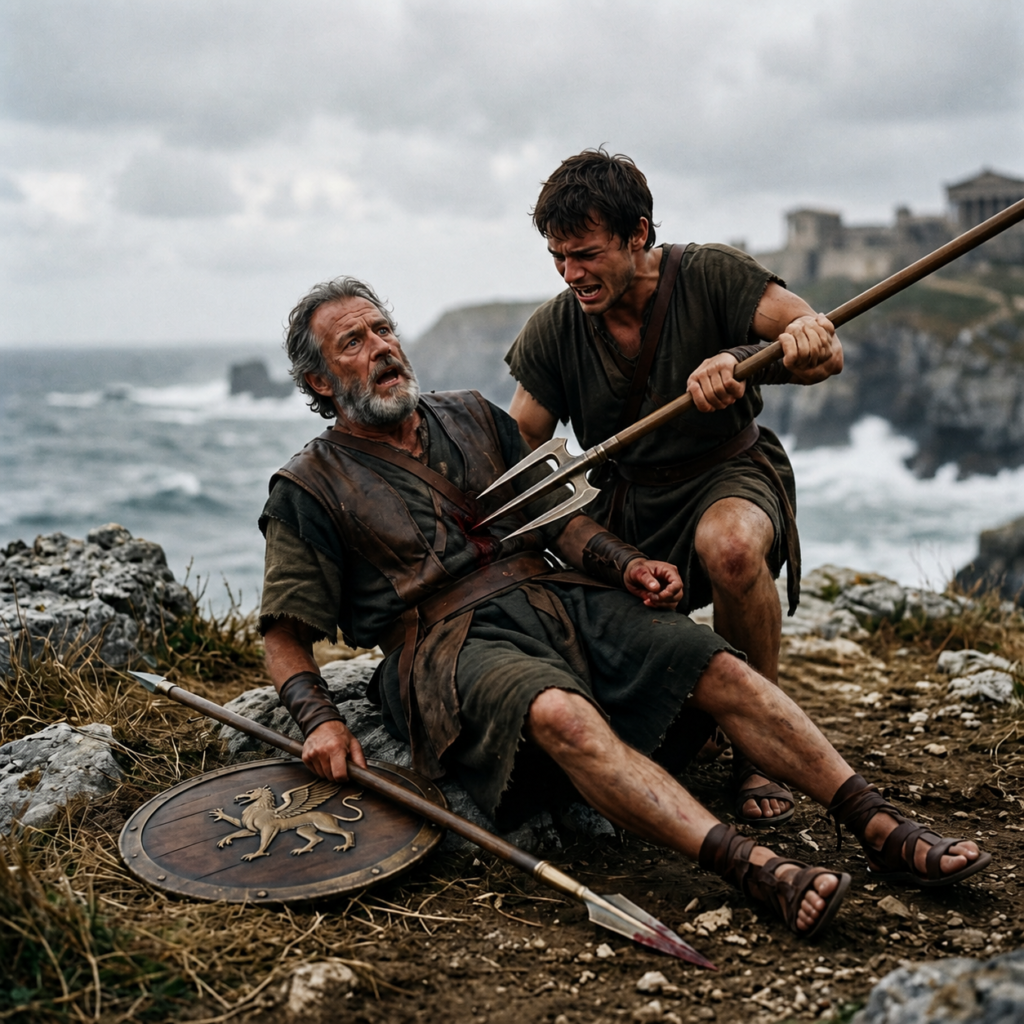
He alone is thrown into storms, attacked by monsters, captured by nymphs, tested by witches, struck by the sea’s fury, and blocked from returning home.
The gods are invisible, but their anger falls solely on him. This is not an adventure. It is the violence of an unseen authority.
If the gods appeared directly, the audience would simply consume it as fantasy. But when the gods remain unseen and only their consequences fall upon a single human, it becomes the terror of absolute power.
The world of Greek myth is not a realm of beautiful gods. It is a world where the emotions of gods function as law. Like living under a military regime— an era where invisible power pressed down on human lives, and humans were no more than ants trying to survive.
In the original myth, Odysseus stays with Circe for a year, has a relationship with Calypso, abandons his men, and follows his own desires. There is infidelity, self-justification, and evasion of responsibility.
But the film deliberately removes all of this. There is no romance with Circe. No emotional entanglement. No physical relationship. Just a brief encounter. This choice reframes Odysseus not as a man to be judged, but as a human sacrificed to divine violence.
So Odysseia is not a grand adventure film. To me, it is a tragedy of power— the arrogance of gods, their invisible violence, and the helplessness of a human who cannot choose anything. Odysseus is not a hero. He is a victim of divine order.
Odysseia was truly a long film. Not because of its runtime, but because I had to follow the entire journey of a man shaken by the violence of gods who never appear.
오디세이아 리뷰 — 보이지 않는 신들의 폭력 속에서 흔들린 한 인간
오디세이아는 단순히 긴 영화가 아니었다. 나에게는 보이지 않는 신들의 폭력과 인간의 무력함을 끝까지 밀어붙이는 여정이었다. 영화는 오디세우스를 영웅으로 그리지 않는다. 그는 신화 속에서처럼 교활하거나 불성실한 남자가 아니라, 신들의 질서와 감정에 휘말린 피해자로 재해석된다.
흥미로운 점은, 이 긴 영화 동안 정작 신들은 단 한 번도 직접 등장하지 않는다는 것이다. 그리스 신화라면 당연히 있어야 할 신탁, 신의 명령, 신의 현현— 이 모든 것이 영화에서는 완전히 사라져 있다.
대신 화면에 나타나는 건 괴물, 님프, 마녀뿐이다. 스킬라, 카립디스, 칼립소, 키르케… 이들은 모두 신들의 질서를 집행하는 대리자처럼 등장한다. 하지만 그 누구도 신탁을 받고 움직이지 않는다. 그 누구도 신의 명령을 따르지 않는다. 그 누구도 신의 분노를 직접적으로 겪지 않는다.
오직 오디세우스만 예외다.
그는 폭풍에 휘말리고, 괴물에게 공격받고, 님프에게 붙잡히고, 마녀에게 시험받고, 바다의 분노를 받고, 귀환을 방해받는다.
신은 보이지 않는데 신의 분노는 오디세우스에게만 떨어진다. 이건 단순한 모험이 아니라 보이지 않는 권력의 폭력이다.
신이 직접 나타나면 관객은 그걸 판타지로 소비한다. 하지만 신이 보이지 않는데 그 영향력만 인간에게 떨어지면 그건 절대 권력의 공포가 된다그리스 신화의 세계는 아름다운 신들의 세계가 아니라 “신의 감정이 곧 법이던 시대”였다. 군사정권처럼, 보이지 않는 권력이 인간을 짓누르던 시대였다. 인간은 그저 일개미 만도 못한 존재였다.
원래 신화 속 오디세우스는 키르케와 1년을 함께 보내고, 칼립소와도 관계를 맺고, 부하들이 돼지가 되든 죽든 상관없이 자기 욕망과 선택을 따라가는 인간이다. 불륜도 있고, 자기합리화도 있고, 책임 회피도 있다.
하지만 영화는 이 모든 걸 의도적으로 삭제한다. 키르케와의 로맨스는 없다. 감정도 없다. 육체적 관계도 없다. 그냥 스쳐 지나가는 만남처럼 처리된다. 이건 오디세우스를 도덕적 평가의 대상이 아니라 신적 폭력의 희생자로 만들기 위한 선택이다.
그래서 이 영화는 웅장하거나 화려한 모험담이 아니다. 나에게는 권력 비극이었다. 신들의 독선과 폭력, 그리고 그 속에서 아무것도 선택할 수 없는 인간의 무력함. 오디세우스는 영웅이 아니라 신적 질서의 희생자로 그려진다.
오디세이아는 정말 긴 영화였다. 하지만 그 길이는 러닝타임 때문이 아니라 보이지 않는 신들의 폭력 속에서 흔들리는 한 인간의 여정을 끝까지 따라가야 했기 때문이다
