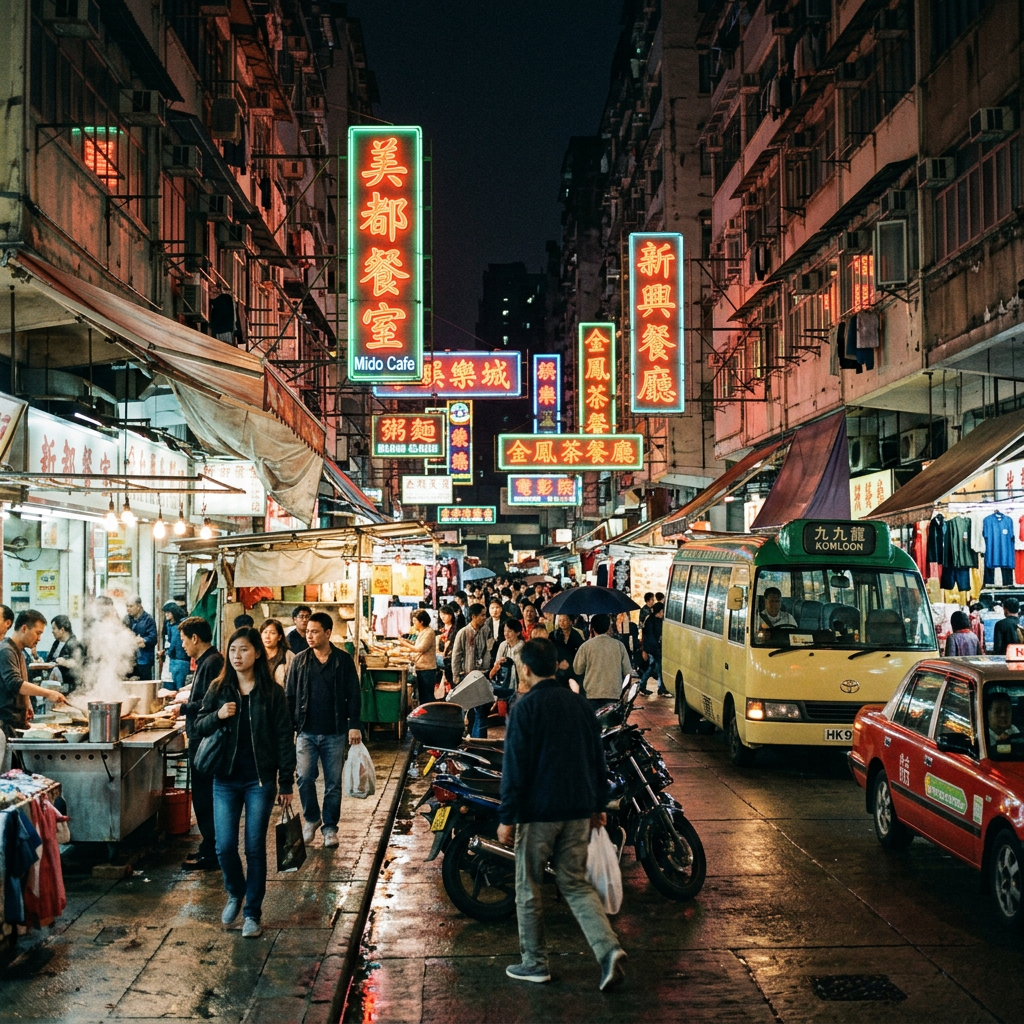
When I was a child, every airplane I saw in the sky seemed destined for Hong Kong or the United States. It wasn’t that I knew much about geography—Hong Kong was simply the brightest, most glamorous place my young mind could imagine. In my neighborhood, anyone who had visited Hong Kong instantly became a local celebrity. If a friend’s father went there on a business trip, we reacted with more excitement than we did for Japan or America.
For Koreans of that era, Hong Kong wasn’t just another foreign city. It was the most visible “outside world” on television, the most dazzling city in movies, and the place that looked as if it was living in the future long before we were. Hong Kong became the symbol of everything modern, fast, and cosmopolitan— a city that defined what “abroad” meant to us.
The Era When Koreans Fell in Love with Hong Kong Cinema
During the 1980s and 1990s, Hong Kong cinema swept across Korea like a cultural wave. It wasn’t just popular—it was dominant. Before global streaming, before Hollywood became omnipresent, Hong Kong films were the foreign culture Koreans encountered most frequently.
- Chow Yun-fat’s heroic bloodshed films shaped the fantasies of countless boys
- Leslie Cheung and Maggie Cheung defined the emotional tone of youth
- Jackie Chan’s action scenes changed how children played
- Wong Kar-wai’s neon-lit melancholy introduced Koreans to a new kind of urban sensibility
Almost everyone in Korea loved Hong Kong movies. It wasn’t merely a matter of taste— it was a collective longing for the speed, style, and atmosphere that Hong Kong embodied.
Hong Kong had already experienced rapid urbanization, financial growth, and global exposure. That energy flowed directly into its films and music, and Koreans absorbed it as a glimpse of the world we hoped to reach someday.
Hong Kong’s Golden Era: A City Made of Light
In those decades, Hong Kong truly was the center of Asia. The city transformed from a manufacturing hub into a powerhouse of finance, logistics, and real estate. Neon signs filled the night, high-rise apartments stacked tightly against the hills, and the streets pulsed with a speed that felt almost electric.
Hong Kong was simultaneously:
- a global financial capital
- the cultural heart of Asia
- the birthplace of Cantopop
- and the strongest film industry in the region
It wasn’t just a successful city— it was the face of the future.
After the Millennium, the Air of the City Changed
But after the millennium, and especially after Hong Kong’s return to China, the city’s once-mighty film industry and cultural energy began to fade.
- Mainland capital reshaped the industry
- Hong Kong’s free, stylish filmmaking was pressured by new commercial and political realities
- The star system collapsed
- Redevelopment and regulation erased many of the city’s iconic streets and neon landscapes
The city looked the same, yet felt different. The atmosphere—the intangible “air” of Hong Kong—had shifted.
My First Visit in the Late 2000s
When I finally visited Hong Kong in the late 2000s, I felt something strange.
The same streets, the same high-rise apartments, the same trams and neon lights— yet the emotional resonance was weaker.
The city was still impressive, still vibrant, but the era I had dreamed of was gone. Hong Kong was still Hong Kong, but the Hong Kong of the 80s and 90s no longer existed.
That was when I realized something important: the Hong Kong I missed wasn’t the real city, but the Hong Kong of movies, the Hong Kong on TV, the Hong Kong that children in my neighborhood imagined with shining eyes.
We Miss the Era, Not Just the City
Many Koreans still feel nostalgic for old Hong Kong. But what we truly miss is not the physical place— it is the era that shaped our dreams.
We miss:
- the speed of the city
- the glow of neon
- the emotional tone of Hong Kong cinema
- the feeling of discovering a world larger than our own
Hong Kong still exists, of course. But the Hong Kong of that golden era remains frozen in memory, like a completed scene from a film.
And so we revisit old Hong Kong movies, not just to watch them, but to briefly return to a world that no longer exists— a world filled with the romance of a time we have lost.
홍콩, 한 시대가 빛나던 순간과 우리가 잃어버린 낭만
어렸을 때 하늘을 나는 비행기를 보면 난 그 비행기가 무조건 홍콩이나 미국을 간다고 생각했다. 사실 다른 나라 이름을 몰랐던 것뿐이지만, 그만큼 홍콩은 내 어린 마음속에서 가장 멀고 화려한 세계였다. 우리 동네에서 누가 홍콩을 다녀왔다고 하면 그 사람은 단숨에 유명인이 되었고, 친구 아버지가 홍콩으로 출장 간다는 말만 들어도 우리는 일본이나 미국보다 더 크게 열광했다.
그 시절 한국인들에게 홍콩은 단순한 해외 도시가 아니었다. TV 속에서 가장 자주 등장하는 외국, 영화 속에서 가장 화려하게 빛나는 도시, 한국보다 먼저 미래를 살고 있는 곳이었다. 그래서 홍콩은 ‘해외’라는 단어보다 먼저 떠오르는 상징이었고, 아이들의 상상 속에서도 비행기의 목적지는 자연스럽게 홍콩이 되곤 했다.
한국인들이 홍콩영화에 열광했던 시대
1980–90년대 홍콩영화는 한국 사회 전체를 흔들었다. 지금처럼 취향이 다양하게 갈라지던 시대가 아니었고, TV·비디오·극장에서 접하는 외국 콘텐츠의 대부분이 홍콩영화였다.
- 주윤발의 총잡이 영화는 남학생들의 우상이었고
- 장국영과 장만옥의 감성은 한국의 청춘 감각을 바꿔놓았으며
- 성룡의 액션은 어린이들의 몸짓을 바꿔놓았다
- 왕가위의 네온과 비는 ‘도시의 감성’이라는 개념을 처음 만들어냈다
한국인들은 거의 모두 홍콩영화에 열광했다. 그건 단순한 영화 취향이 아니라, 홍콩이라는 도시가 가진 속도·감각·미학에 대한 집단적 동경이었다.
홍콩은 한국보다 훨씬 먼저 도시화·금융화·세계화를 경험했고, 그 에너지가 영화와 음악을 통해 한국으로 그대로 흘러들어왔다. 그래서 홍콩은 한국인들에게 “우리가 언젠가 도달하고 싶은 세계”의 얼굴이었다.
홍콩의 전성기: 도시가 빛으로 가득 찼던 시절
80–90년대 홍콩은 실제로도 아시아의 중심이었다. 제조업에서 금융·물류·부동산으로 빠르게 전환하며 도시 전체가 압축된 속도로 성장했고, 네온사인으로 가득한 밤거리와 빽빽한 고층 아파트는 홍콩만의 독특한 미학을 만들었다.
그 시절 홍콩은
- 세계 금융 중심지
- 아시아 문화의 수도
- 캔토팝의 본고장
- 영화 산업의 절대 강자
이 모든 것을 동시에 갖춘 도시였다. 홍콩은 단순히 잘나가는 도시가 아니라, 아시아가 꿈꾸던 미래의 얼굴이었다.
새천년 이후, 도시의 공기가 달라지다
하지만 새천년이 오고, 홍콩이 중국으로 반환되면서 그 위풍당당했던 영화 산업과 도시의 활력은 서서히 힘을 잃기 시작했다.
- 본토 자본이 산업을 흡수했고
- 홍콩만의 자유로운 영화 스타일은 검열과 상업적 기준에 눌렸으며
- 스타 시스템은 붕괴했고
- 재개발과 규제로 홍콩 특유의 골목·네온·공간감이 사라졌다
겉모습은 그대로인데 도시의 공기와 결이 달라진 것이다.
2000년대 후반, 내가 처음 만난 홍콩
그래서 내가 2000년대 후반에 홍콩을 처음 찾았을 때, 이상한 감정이 들었다.
똑같은 길, 똑같은 고층 아파트, 똑같은 트램과 네온인데도 마음속에서 울리는 감흥은 예전만 못했다.
도시는 여전히 화려했지만, 그 시대의 속도와 공기는 이미 지나가 있었다. 홍콩은 여전히 홍콩이지만, 80–90년대의 그 홍콩은 더 이상 존재하지 않았다.
그때 깨달았다. 내가 그리워했던 홍콩은 실제의 홍콩이 아니라, 영화 속에서 빛나던 홍콩, TV 화면을 통해 보던 홍콩, 우리 동네 아이들이 꿈꾸던 홍콩이었다는 것을.
우리가 그리워하는 것은 도시가 아니라 ‘시대’다
많은 한국 사람들이 지금도 옛 홍콩을 그리워하는 이유는 단순하다. 우리가 그리워하는 것은 도시 자체가 아니라 한 시대가 만들어낸 공기, 그 시대가 품었던 낭만, 그리고 우리가 그 시절에 가졌던 꿈이다.
홍콩은 여전히 존재한다. 하지만 80–90년대의 홍콩은 이미 하나의 완결된 장면처럼 우리 기억 속에 고정되어 있다.
그래서 우리는 지금도 가끔 옛 홍콩영화를 다시 틀어놓고, 사라진 세계의 빛을 잠시나마 다시 느껴보려 한다. 그건 단순한 향수가 아니라, 한 시대가 끝났다는 사실을 받아들이는 조용한 방식이다.
